How Long Does It Take to Ship a Car Across the US?
Seven to ten days in transit coast to coast, but the number people actually need is the total, and that is the transit plus a few days to a week to get a carrier assigned. Quote yourself two weeks for a cross country move and you will rarely be disappointed. Almost every complaint about auto transport timing comes from counting only the driving and forgetting the wait before it starts.

Transit Times by Distance
Once the car is loaded, the drive itself is fairly predictable.
Under 500 miles is one to two days. Around 500 to 1,000 miles is two to three. Between 1,000 and 1,500 miles is three to five. From 1,500 to 2,000 miles is four to six. And 2,000 miles or more, which covers most true coast to coast moves, is seven to ten days.
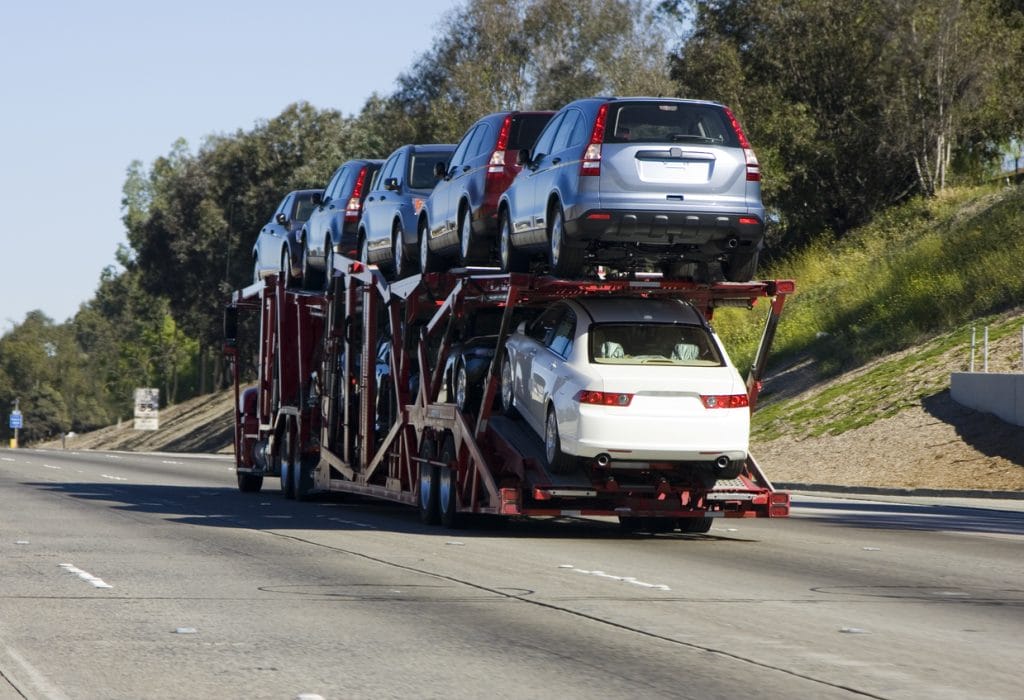
Those figures assume the truck is not driving straight to you. A hauler carries seven to ten vehicles and delivers them in a sequence, so your car may be second on and eighth off. Federal hours of service rules also cap how far a driver legally covers in a day, which is why a car does not travel at the speed you would drive it.
The Wait Before the Drive
This is the part that varies, and it is where the real answer lives.
Assignment usually takes a few days to a week. On a busy corridor between two major metros it can be a day or two. On a quiet lane, into a rural area, or at a price no carrier will accept, it can be considerably longer.
The single biggest thing you control is the pickup window. A range of several days fits into a route a dispatcher is building right now; a single fixed date requires a route to be built around it, so fewer trucks qualify and the wait grows. If your dates are genuinely fixed, expect to pay for that.
What Makes It Slower
Five things, roughly in order of how often they matter.
An underpriced load is the most common. A rate below what carriers accept on your lane means nobody takes it, and the car sits while your window passes. That is a pricing problem presenting as a timing problem.
Rural pickup or delivery adds days, because a driver has to leave the corridor and come back. Meeting at a town on the route often shortens the wait more than paying extra would.
Weather is the seasonal one: snow across the Rockies, the northern plains and the mountain passes closes routes in winter, and hurricane season affects the Southeast. Neither is predictable far ahead.
Peak season tightens everything. Summer relocations, the snowbird runs in autumn and spring, and the military PCS window all compress demand into the same weeks.
And a vehicle that turns out not to run, or not to match its description, means a refused load and a second dispatch.
What Makes It Faster
Fewer levers, but they work.
A flexible pickup window, a realistic price, and an accessible pickup and delivery point are the three that matter, in that order. Meeting the truck at a large lot near a main road rather than a narrow street widens the pool of drivers who can take the load.
Expedited service exists on most lanes and genuinely does move faster, because the load is priced to be picked up first. It costs meaningfully more, and it is worth it only when a date actually costs you something.
Getting a Real Answer for Your Move
Any estimate on a page like this is a range. Yours depends on the specific lane, the season, and how flexible you can be.
What you should expect from a company is a transit estimate and an honest assignment estimate, quoted separately. A company that quotes a delivery date without first having a carrier assigned is quoting something it cannot control.
Track it once it is moving, and remember that delivery windows are windows. A driver held up by weather, a scale house or a delayed unload earlier in the route arrives a day late, and that is normal rather than a failure.
Common Questions
How long is coast to coast? Seven to ten days in transit, plus a few days to a week to get assigned. Allow about two weeks total.
Why does it take days to get a carrier? Your car is waiting for a truck heading your way with a free slot at a price that works.
Can I get a guaranteed delivery date? Not on standard service. Expedited moves faster because the load is priced to be picked up first.
What slows a move down most? An underpriced load. Nobody accepts it, so the car sits while your window passes.
How can I speed it up? A flexible pickup window, a realistic price, and an accessible meeting point.
Get a Quote
Call Ship A Car, Inc. at (866) 821-4555 with both zip codes and your date range, or request an estimate for your lane through the quote calculator.