Shipping a Car to Rallies, Races, Shows and Auctions
The short answer: ship show cars, race cars and collectibles in an enclosed carrier. It costs about a third more than open transport and removes the two risks that matter when you are arriving at an event, road debris and weather, while keeping the odometer where it is. The harder part is not the carrier choice, it is the calendar.
Event Dates Are the Real Constraint
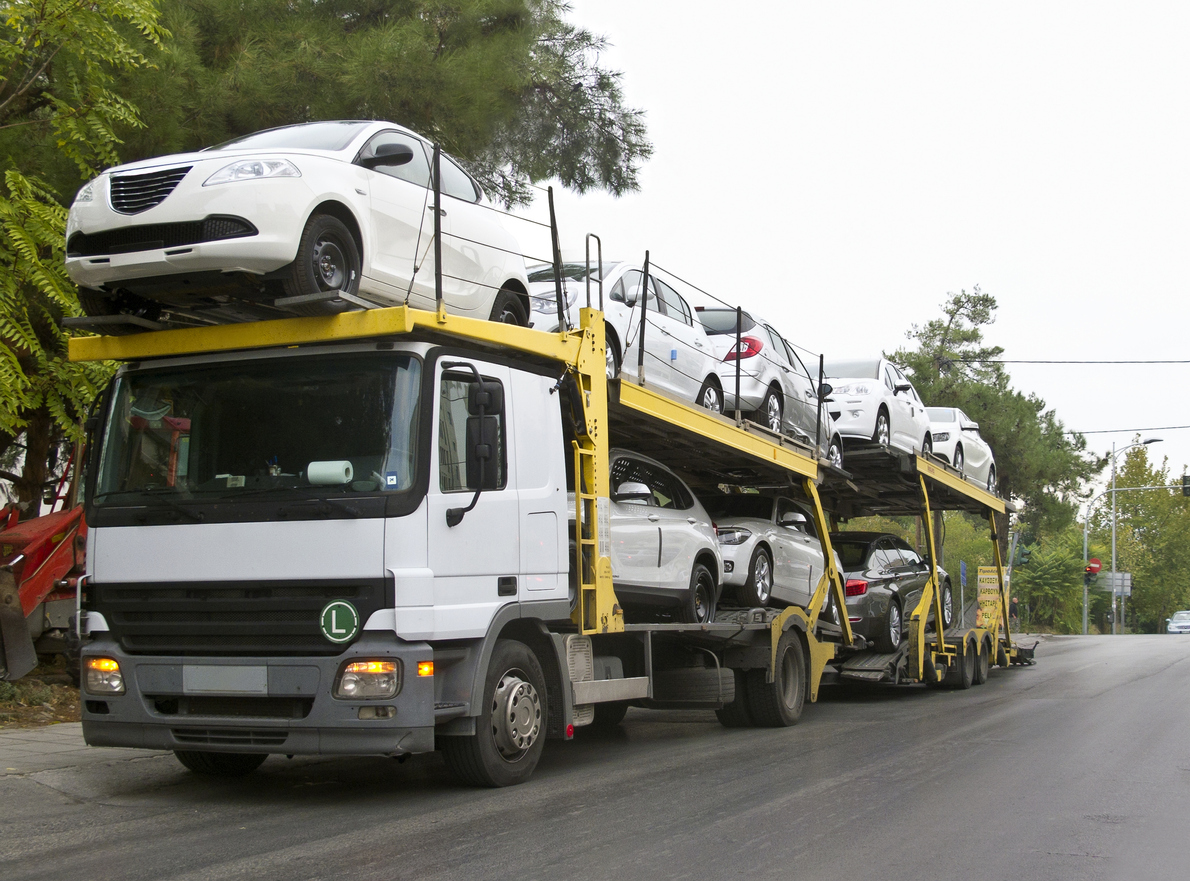
Enclosed capacity is finite, and demand for it concentrates in the same weeks every year. Major auctions, concours weekends, and the big rally dates pull enclosed trailers toward one place simultaneously, and the surrounding fortnight is the hardest time in the calendar to source one at short notice.
Two practical consequences. Book several weeks out for anything tied to an event date rather than a flexible window. And if the schedule is genuinely immovable, say so at quote stage so the arrangement is priced accordingly rather than promised loosely and then squeezed.
Why Enclosed for an Event Car
- Arriving clean matters. A car that spends 1,500 miles on an open deck arrives needing detailing before it can be shown.
- Stone chips are permanent. On original paint or a fresh respray, one chip costs more to correct than the entire premium.
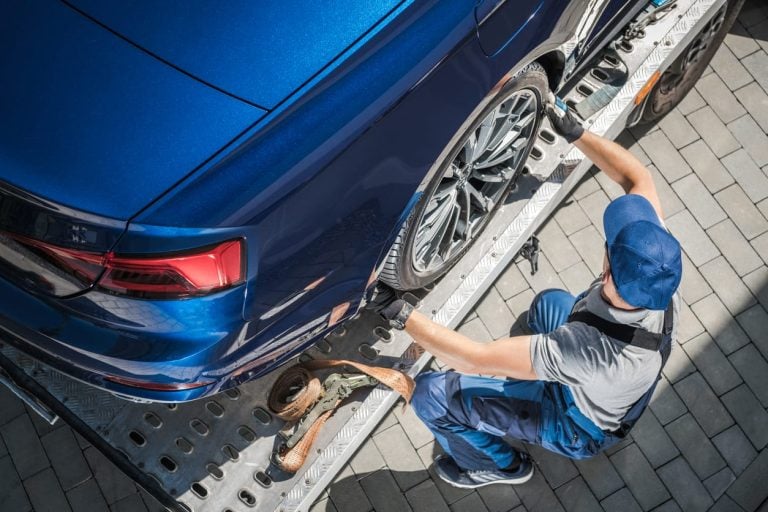
- Low clearance is the norm. Splitters, air dams and lowered suspension make ramp loading the actual risk, and enclosed carriers commonly have hydraulic liftgates.
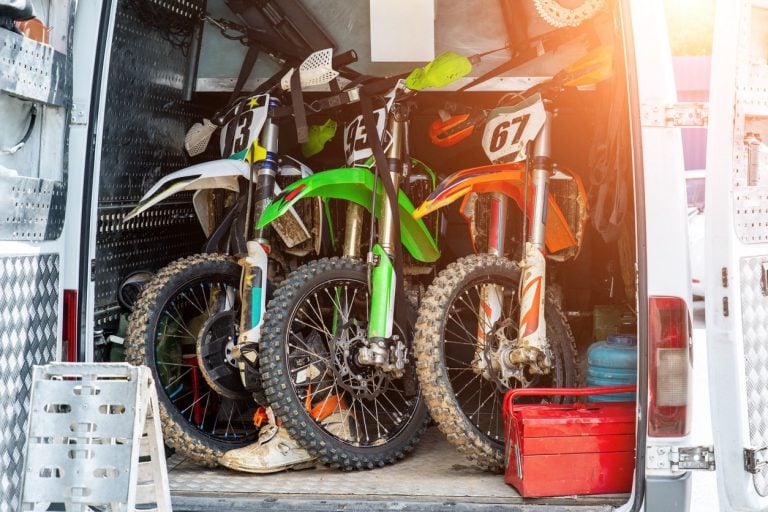
- Race cars often are not street legal, so they cannot be driven even to a meeting point. The trailer has to reach them.
Matching Carrier to Event Vehicle
What to Confirm Before Booking
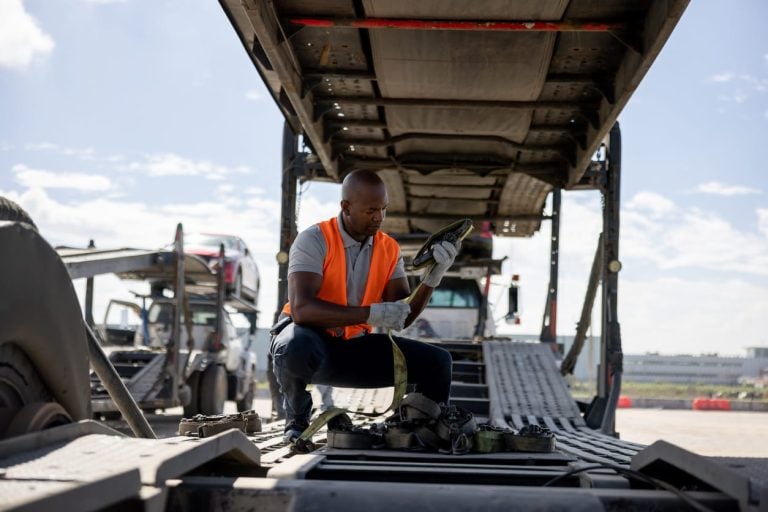
Enclosed describes the walls and nothing else. Ask specifically whether the assigned carrier has a liftgate rather than ramps, whether the car will be secured with soft straps at the wheels rather than chains at the frame, and how many vehicles will share the trailer. A dedicated single-vehicle run costs considerably more than a shared enclosed trailer and is worth it only for genuinely irreplaceable cars.
Then read the cargo insurance certificate. Standard limits are generous for an ordinary vehicle and frequently insufficient for a show car. Compare the stated limit against real market value, and if there is a gap, arrange supplemental coverage or a carrier with higher limits before the car moves.

Delivery at a Venue
Event venues are their own problem and worth planning. Show fields and paddocks have fixed move-in windows, gate access is often controlled and time-limited, and a 75-foot enclosed trailer needs room to turn and unload that a crowded venue may not have during peak hours.

Give your coordinator the venue name, the move-in window, and any gate or credential requirement. Where possible arrange delivery to a nearby lot or hotel and drive the final stretch yourself. Build a buffer day before move-in; arriving the morning of is how a weather delay becomes a missed event.
Preparing the Car
- Wash it before pickup so the condition photographs show paint rather than road film.
- Photograph every panel, wheels, splitter and lower valances in daylight, plus the odometer.
- Leave about a quarter tank. Enough to load and drive off, not enough to add weight.
- Note ride-height settings, kill switches, battery disconnects and any unusual starting procedure.
- Remove trophies, tools, spares and anything loose. Personal items are not covered by cargo insurance.
- Disable alarms and hand over one key, not your only one.
Coming Home Afterward
The return leg is the one people forget, and it is often harder to book than the outbound because everyone at the event needs a trailer in the same 48 hours. If you know you will need transport home, arrange both legs at the same time. It is cheaper and it removes the scramble on the Sunday evening.
Common Questions
How much does enclosed transport to an event cost? About a third above open transport on the same lane. In our bookings between September 2025 and August 2026, open transport ran about $0.60 to $2.00 per mile, and the middle half of open moves around 1,500 miles cost $1,050 to $1,400, so a 1,500-mile enclosed move sits meaningfully above that. In our own book since 2023, the middle half of enclosed moves, the usual choice for a show car, ran $1,100 to $1,750 against $850 to $1,500 for open transport.
Can a non-running race car be collected? Yes, on a winch or liftgate-equipped carrier, typically adding $100 to $250. Say whether it rolls, steers and brakes, because that determines the method.
Can two cars travel together? Yes, and it is cheaper per vehicle than two arrangements. Give the coordinator both vehicles with dimensions.
How far ahead should I book around a major auction? Several weeks. That fortnight is the tightest in the enclosed market.
Auction Buying and Post-Sale Transport
Buying at a collector auction creates a specific transport problem: you have just committed to a car you may never have driven, it needs to leave the venue within a short window, and every other successful bidder needs a trailer in the same 48 hours. Auction houses often recommend a transporter, which is convenient, but compare it rather than accepting it by default.
Arrange collection before you bid if you can. Know the venue’s removal deadline, whether storage is charged after it, and who releases the vehicle. Plan a genuinely thorough condition record at collection, because on a car bought under the hammer you have no prior baseline to compare against.
Trailering It Yourself vs Hiring Transport
Plenty of enthusiasts own a trailer, and for local events that is usually the right answer. The calculation changes with distance. A 1,200-mile tow means a suitable tow vehicle, fuel at towing consumption, two days each way, and wear on both vehicles, against a professional enclosed shipment that arrives without you spending four days driving.
The other factor is what happens if something goes wrong far from home. A trailer bearing failure on an interstate with a six-figure car aboard is a materially worse afternoon than a phone call to a coordinator.
Get a Quote
Call Ship A Car, Inc. at (866) 821-4555 with your event date and venue, or start with the quote calculator.