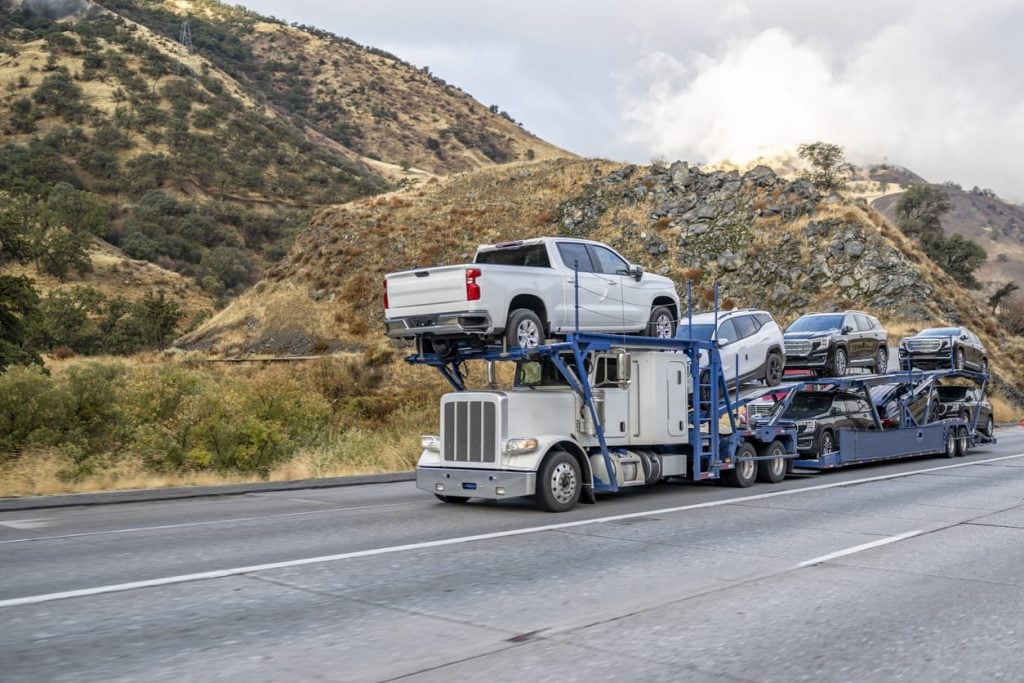
Why Car Shipping to Major Cities Is Cheaper
The same 1,200 mile move can cost noticeably less into Dallas than into a town two hours past it, and the reason is not the mileage. It is that a carrier going to Dallas is joining traffic that already exists, while a carrier going to the town has to leave its route, drive there, drive back and lose most of a day doing it, for one vehicle.
Understanding that one mechanism explains most of what looks arbitrary about transport pricing, and it tells you how to get a rural move priced like a city one.
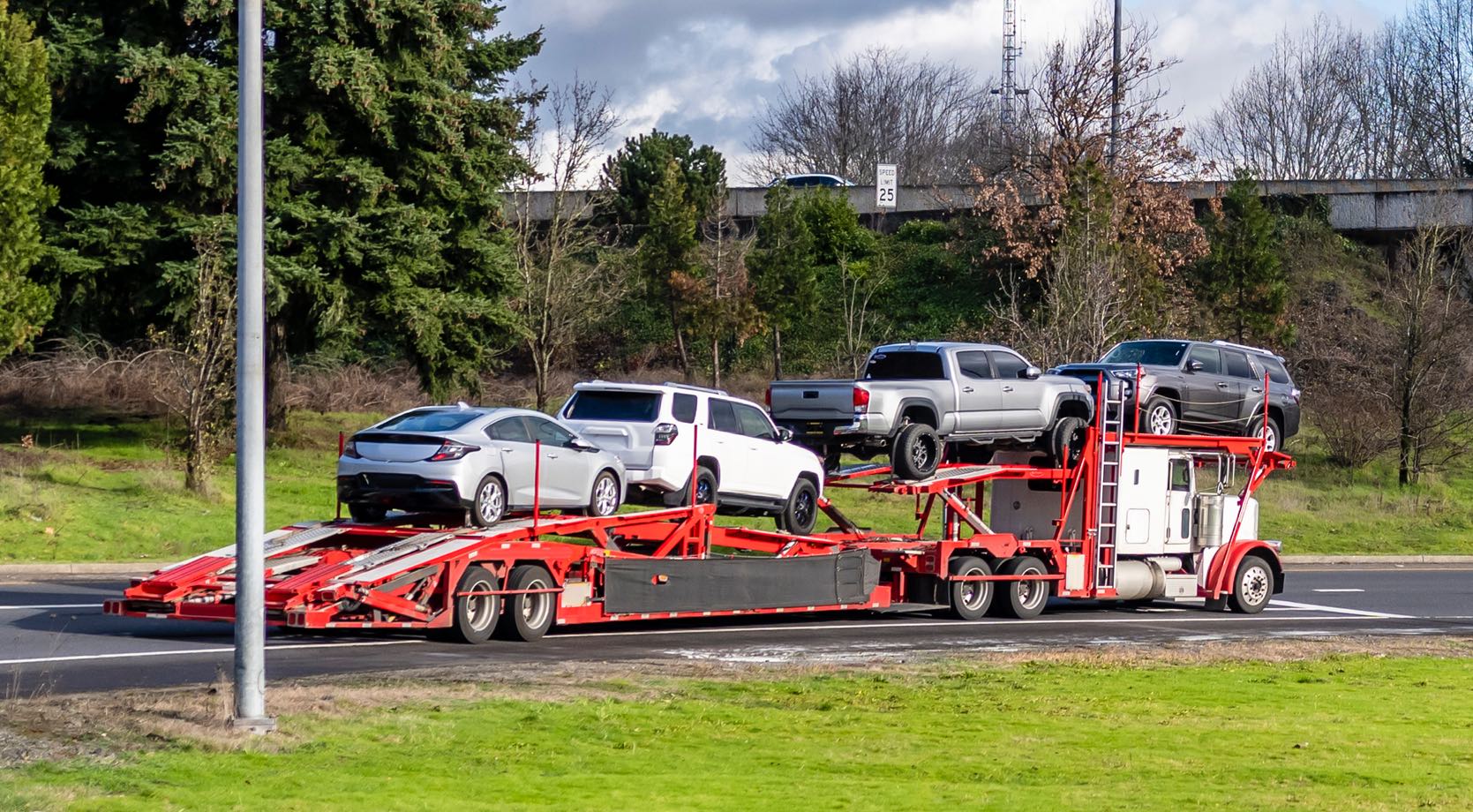
Carriers Run Corridors, Not Destinations
A car hauler carries seven to ten vehicles and needs to fill the trailer in both directions to make the trip pay. Drivers therefore work established corridors: Los Angeles to Phoenix to Dallas, the Interstate 95 spine from Boston to Miami, Chicago to Denver to the West Coast.
Those corridors exist because population is concentrated along them. On a busy lane, a driver can fill a trailer within a day and refill it for the return. That density is the whole advantage, and it shows up as competitive rates and quick assignment.
Take the same driver forty miles off the interstate for a single vehicle and the arithmetic changes completely. Those miles carry one car instead of nine, the detour eats a couple of hours out of a legally capped driving day, and there is nothing to collect on the way back.
What Actually Drives the City Discount
Three things compound.
Volume. More people moving in and out means more vehicles available to fill a trailer, so a carrier is never waiting around for a load.
Balance. Major cities generate traffic in both directions. A lane that is busy one way and empty the other prices worse, because the carrier has to cover the empty return.
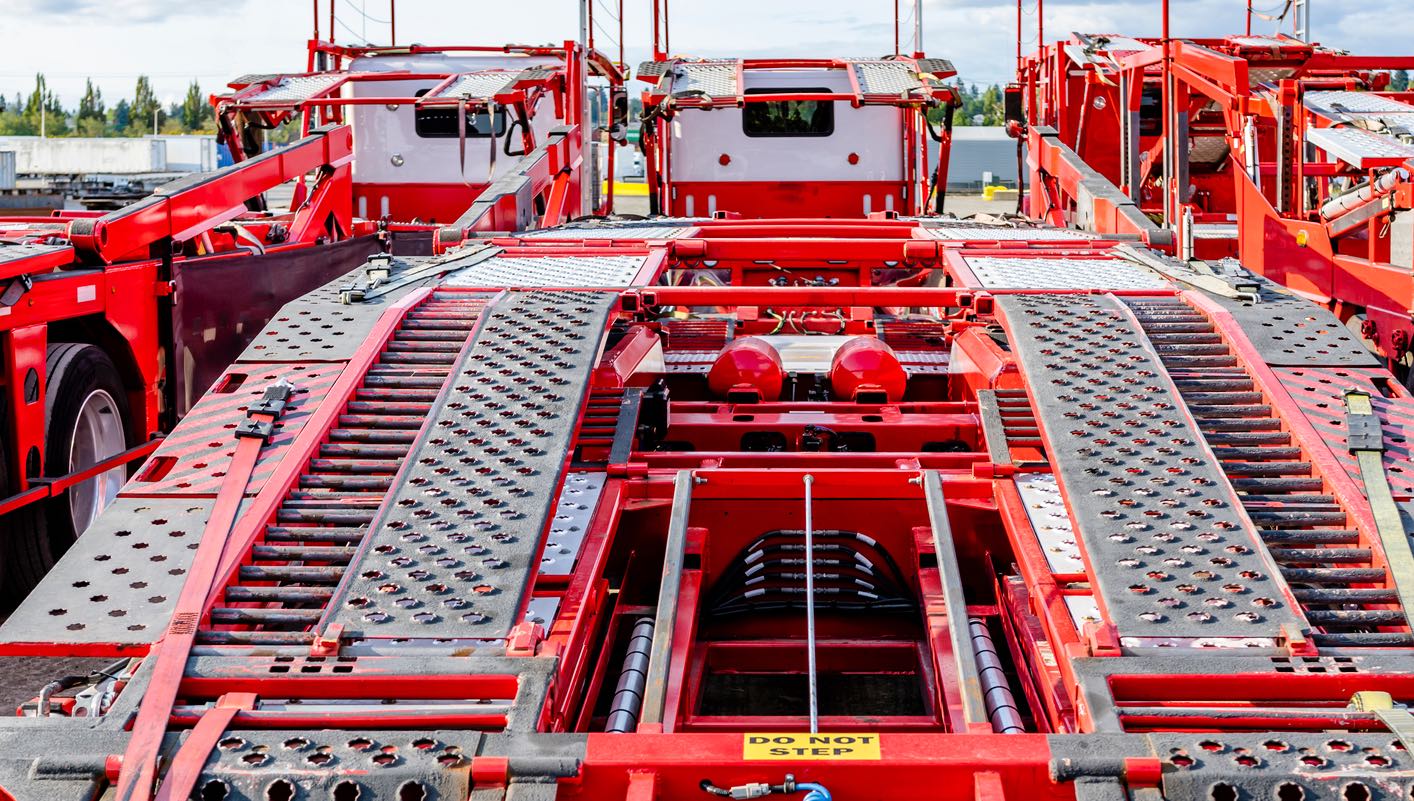
Competition. On a busy lane, several carriers can take your vehicle, and they price against each other. On a thin lane you are dealing with whoever happens to be heading that way, which is a different negotiation.
Assignment speed follows the same pattern. A city to city move is often assigned within a day or two. A remote destination can take a week, because the load has to wait for a carrier whose route genuinely passes nearby.
The Practical Move: Shorten the Detour
Here is the part that saves money, and it works on almost any awkward address.
If you live well off the interstate, offer to meet the driver at a large retail lot near a highway exit rather than expecting collection at the door. That single change can remove most of a rural surcharge, because it removes the detour the surcharge was paying for.
The same applies inside cities for a different reason. A narrow street with parking on both sides and low branches costs a driver just as much time as forty rural miles, and a 75 foot vehicle cannot reverse around corners. Meeting somewhere a truck can actually turn is worth real money in Boston or San Francisco too.
Ask for it explicitly when you get a quote. Say where you are, say you can meet at a named lot near a specific exit, and let the quote reflect that.
The Return Leg Matters as Much as Yours
Something worth understanding, because it explains prices that otherwise look random.
A carrier is pricing a round trip, not your leg. If your vehicle is going in the direction the trailer is already full and the return runs empty, the price has to cover both. That is why snowbird routes cost more southbound in autumn and more northbound in spring, and why a lane between two busy cities beats a lane from a busy city to a quiet one even at the same distance.
If your plans allow a choice of direction or season, the quieter direction is frequently the cheaper one.
Two Things That Are Not True
Big city always means cheap. Dense urban cores are their own problem. Manhattan, downtown Boston and central San Francisco all have excellent carrier availability and terrible access, so the corridor advantage is partly given back at the last mile.
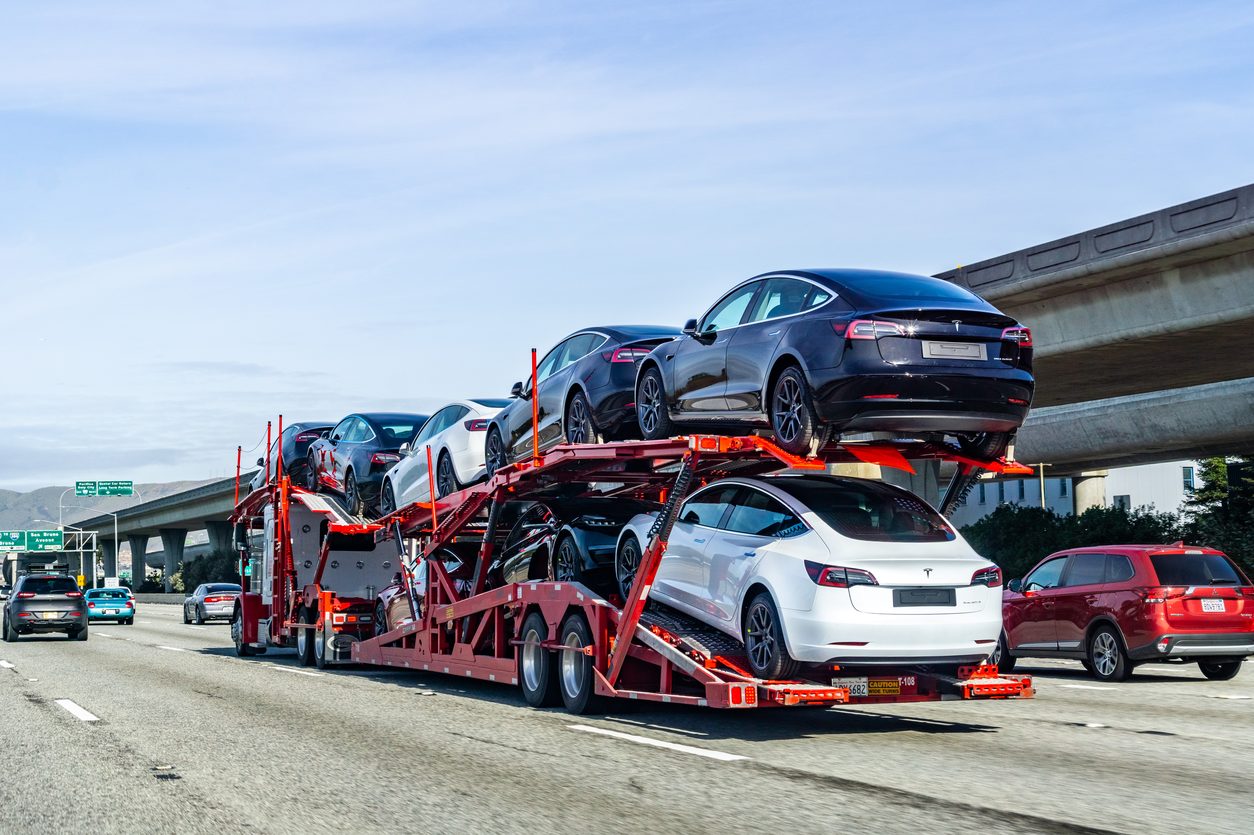
Rural always means expensive. A small town sitting directly on an interstate frequently prices like a city, because the carrier does not have to leave its route at all. It is the distance from the corridor that matters, not the population.
How to Use This When Booking
Give a two or three day pickup window, which lets a carrier fit you into a route already running. Name the nearest interstate exit when you describe your location. Offer a meeting point if you are more than a short detour from a major road. And book one to two weeks ahead rather than three days, because on a thin lane there may only be one suitable carrier that week.
The wider set of factors is covered in our page on what determines the price of shipping a car, and the day to day market movement in the spot market and the contract market.
Common Questions
Why is a shorter rural move sometimes dearer? The carrier leaves an established corridor for one vehicle, and those detour miles carry no other cars.
How much can a meeting point save? On an address well off the interstate it frequently removes most of the rural surcharge, because it removes the detour.
Are cities always cheaper? Corridors are. Dense urban cores have great availability but difficult access, which gives some of it back.
Why does assignment take longer to remote places? Fewer carriers pass nearby, so the load waits for one whose route genuinely works.
What should I tell the company about my location? The nearest interstate exit, and whether you can meet there. Both change the quote.
Get a Quote
Call Ship A Car, Inc. at (866) 821-4555 with both zip codes, your date range and the nearest highway exit, or request an estimate for the move through the quote calculator.