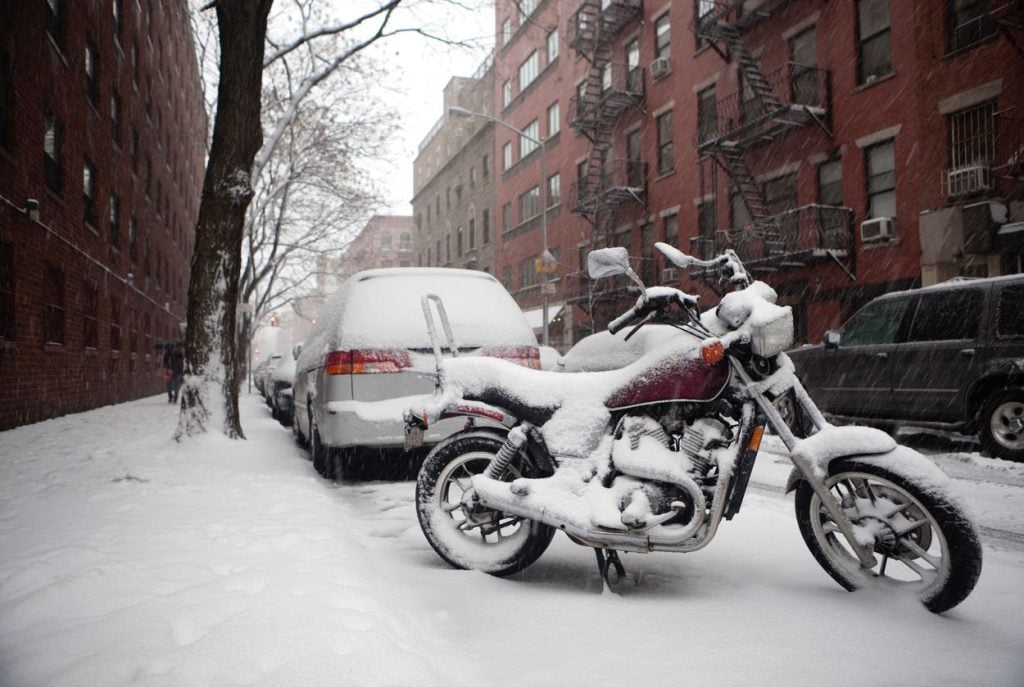
Every rider north of the snow line faces the same decision in November. Put the bike away until April and do the storage properly, or send it somewhere warm and keep riding through the winter. Both are legitimate. What is not legitimate is the third option most bikes actually get, which is a cover thrown over it in a cold garage with a half tank of fuel and a battery slowly dying. Here is how to do either of the first two well.
If It Stays: The Six-Job Storage Checklist
Storage failures are predictable and cheap to prevent. Six jobs cover nearly all of them.
- Fuel. Fill the tank to limit condensation, add a stabilizer, and run the engine long enough to pull treated fuel through the injectors or carburetors.
- Battery. Connect a maintenance tender, or remove the battery and keep it somewhere above freezing on a tender. A battery left connected for five cold months rarely survives.
- Oil. Change it before storage, not after. Used oil holds acids and moisture that sit against bearings all winter.
- Tires. Inflate to the maximum on the sidewall, and lift the bike on stands if you can so the tires do not flat-spot.
- Pests. Plug the exhaust and the air intake with steel wool or purpose-made plugs, and leave a note on the seat so you remember to remove them in spring.
- Cover. Use a breathable cover in a dry space. A plastic tarp traps moisture against the paint and the chrome.
Do those six and the first start in April is uneventful. Skip them and the season begins with a dead battery, a gummed fuel system and surface rust where the cover held the damp.
If It Goes: Ship the Bike to a Warm Address
A growing number of northern riders do what snowbird drivers have done for decades: they send the machine south and follow it. The bike ships to a winter address in Florida, Arizona or Texas in November, the rider flies down for weeks or months at a time, and the bike comes home in April on a second carrier. Nothing is winterized because nothing sits idle.
The arithmetic is more even than people expect. Five months of paid storage, a spring service to wake the bike up, and five months of not riding sit on one side. A two-way transport on the other. The motorcycle shipping page explains how a bike travels, and our snowbird transport page covers the seasonal timing, because a motorcycle follows the same calendar a car does.
How the Move Works
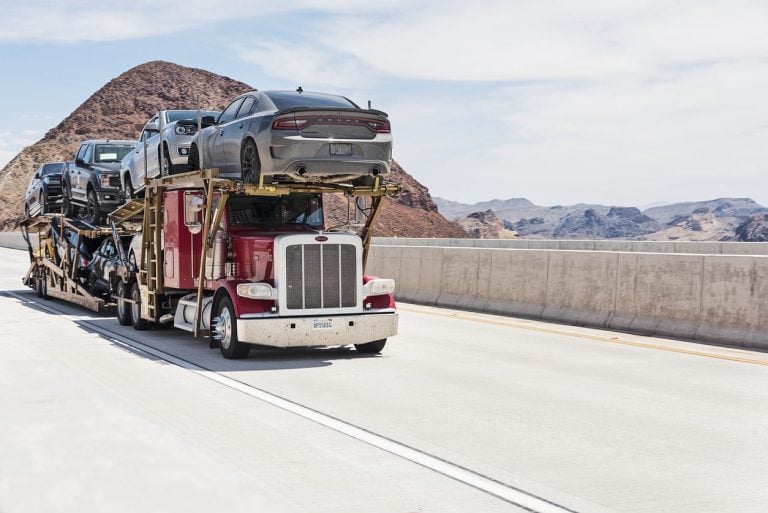
The bike is picked up at your home, a dealer or a storage unit. On an open carrier it rides upright in a wheel chock, strapped at the frame and the triple tree, alongside cars and other bikes. In enclosed transport it rides inside a trailer, out of the salt and the weather, which matters most in exactly the months this move happens. Enclosed typically adds about a third to the open rate.
Preparation is lighter than storage preparation. Run the fuel down to about a quarter tank, remove soft bags and electronics, photograph the bike from every angle in daylight, and have the key ready for the driver. The condition report on the bill of lading at pickup, and again at delivery, is the document that protects you, so take the ten minutes to read it before signing.
Delivery goes to the winter address, a dealer nearby, or a storage unit if you arrive later than the bike. A gated community or a narrow street means meeting the carrier at a nearby lot, which your coordinator arranges before dispatch.
Timing the Two Legs
Southbound demand runs from late October through January, and northbound from March through May. Book the two legs together. Your coordinator sets the spring return at the same time as the fall move, so the bike is home when the roads clear and you are not competing for a carrier in April with every other rider who waited. Two to three weeks of lead time is comfortable outside the holiday weeks, and more is better around Thanksgiving and the New Year. Our Florida guide and Arizona guide show how the seasonal lanes price for cars, and motorcycles follow the same pattern.
Which One Fits You
The choice usually settles itself once you answer three questions. Do you already spend part of the winter somewhere warm? If a second home or a long family stay is on the calendar, the bike should be there too, and storage is paying to not ride. Is the bike worth more than its storage would cost? A touring machine with a finish you care about earns enclosed transport and a season of use more easily than a commuter that costs less than the freight. How much do you actually ride in February? A rider who logs a thousand miles a winter in Arizona has a clear answer. A rider who would take the bike out twice has an equally clear one, and the storage checklist above is written for exactly that case.
Whichever way you go, decide in October. Storage done in a hurry after the first snow is where the skipped steps happen, and a carrier booked in the week before Thanksgiving is booked into the busiest lane of the year.
Common Questions
Can the bike ship with my car? Yes. A car and a motorcycle can share one order and often one carrier, and a multi-vehicle booking usually prices below two separate ones.
What if the bike does not run? It ships as inoperable and is loaded by ramp and winch. Say so at booking so the right equipment is sent.
Is enclosed transport worth it for a motorcycle? For a touring bike or anything with a finish you care about, in winter, usually yes. The roads the carrier drives in November are salted, and enclosed keeps that off the machine.
How long is the bike on the truck? A Northeast to Florida run is typically a few days after a pickup window of a few days. Cross-country moves take about a week. Your coordinator gives the window for your lane.
Should I still stabilize the fuel if the bike ships? No. It will be ridden within days of arriving. Run the tank down to a quarter and leave it at that.
Get a Quote
Put the bike, both addresses and your dates into the quote calculator for an emailed estimate, or call (866) 821-4555 and a coordinator will set up both legs of the season on one call. No deposit is taken until a carrier is assigned to your order.