Preparing a Motorcycle for Shipping When You Leave California
A motorcycle is easier to ship than a car and easier to damage in transit, and both facts come from the same thing: it does not stand up on its own. Everything that matters happens in the preparation, and about half of it is specific to leaving California.
Here is the sequence, from paperwork to the moment the bike is strapped down.
Sort the California Paperwork First
Two things catch people leaving the state, and both are easier to handle before the bike is on a truck.
California emissions rules mean some motorcycles were built to a California specific specification. That is not a problem when you leave, but it can matter when you register in the new state, and it is worth knowing which specification your bike is so the paperwork question does not surprise you at the counter.
The second is registration timing. Most states require you to register within a defined window after establishing residency, and the bike needs to be there for inspection where that applies. Look up the new state’s window before you set the shipping date, and work backward from it rather than forward from your move.
Keep the title, registration and any lien documentation with you rather than in the bike’s storage. Personal items and paperwork are not covered by a carrier’s cargo insurance.
Decide Crated, Open or Enclosed
Three ways a bike travels, and the price gap between them is real.
Open transport on a trailer with cars, secured in a wheel chock. Cheapest, exposed to weather and road debris, and entirely adequate for an ordinary commuter bike.
Enclosed transport in a covered trailer, usually with other bikes. More expensive and the right answer for anything with fresh paint, chrome worth protecting, custom work, or real value. Most enclosed motorcycle carriers use proper chocks and soft straps as standard.
Crated, where the bike is strapped into a wooden or metal crate. Common for long distance and overseas moves and for very valuable machines. Adds cost and preparation time, and usually means partial disassembly such as removing mirrors and lowering bars.
For a cross country move within the United States, enclosed is the usual recommendation for anything you care about and open is a reasonable choice for a bike that already lives outdoors.
Prepare the Bike Mechanically
None of this is difficult and all of it prevents the common problems.
Fuel. Leave it low, roughly a quarter tank or less. Enough to load and unload, not enough to slosh or add weight. Some carriers ask for near empty, so confirm when you book.
Battery. Make sure it is charged and the terminals are clean, because a bike that will not start turns a simple load into a physical struggle. On a long transit, disconnecting the negative terminal is sometimes requested. Ask rather than assume.
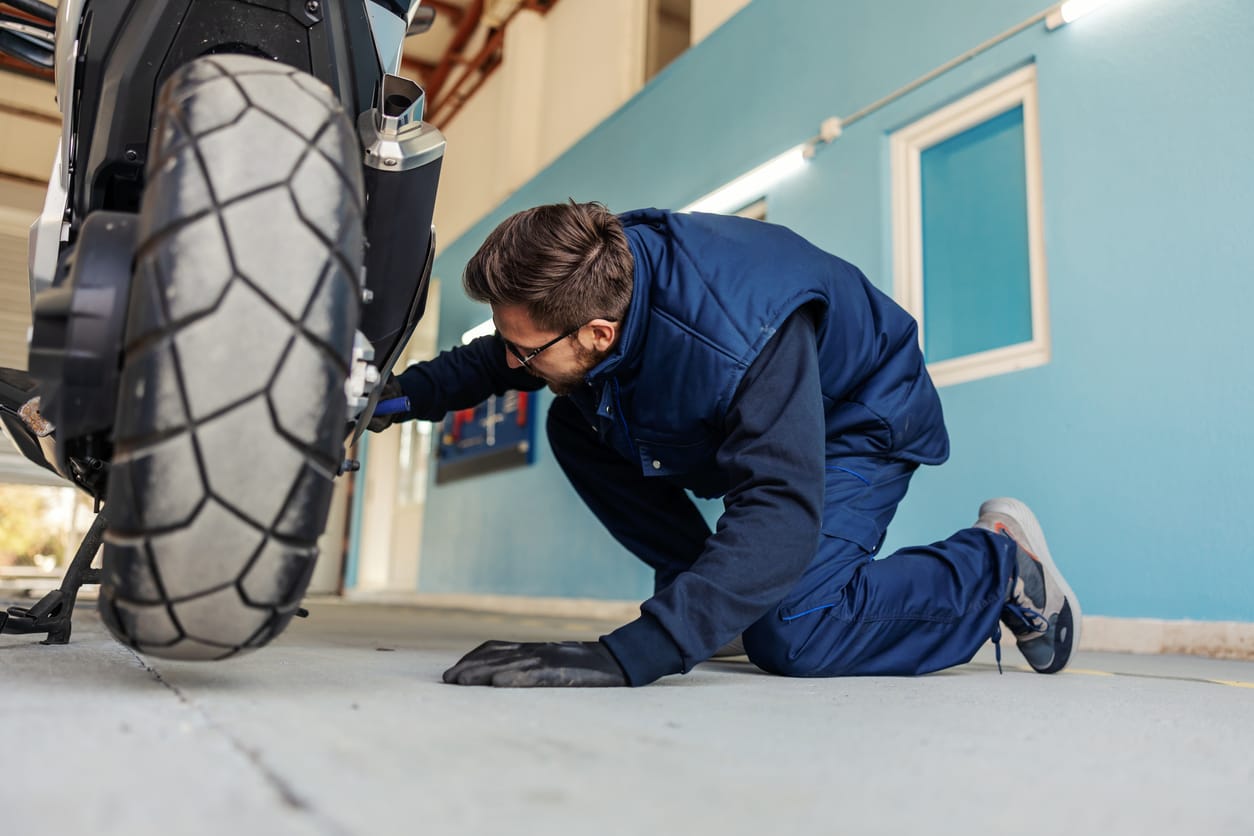
Tires. Correct pressure matters more than people think, because the bike sits on them under strap tension for days. Check them cold before pickup.
Leaks. Fix any weeping fork seal, gasket or fuel line before shipping. A bike that leaks onto a vehicle below it on an open trailer is a problem that becomes yours.
Strip and Secure Everything Loose
This is where most transit damage originates.
Remove the windshield if it detaches easily, along with saddlebags, top boxes, GPS mounts, phone cradles and any aftermarket accessory that is not bolted down hard. Fold or remove the mirrors. Take off loose trim and anything with a suction mount.
Empty the storage compartments completely. Then walk around the bike once more looking for anything that moves when you push it, because highway wind at 65 miles per hour finds all of it.
If the bike has a cover, leave it off. A cover flapping at speed does more paint damage than the weather it was meant to prevent.
Document the Condition
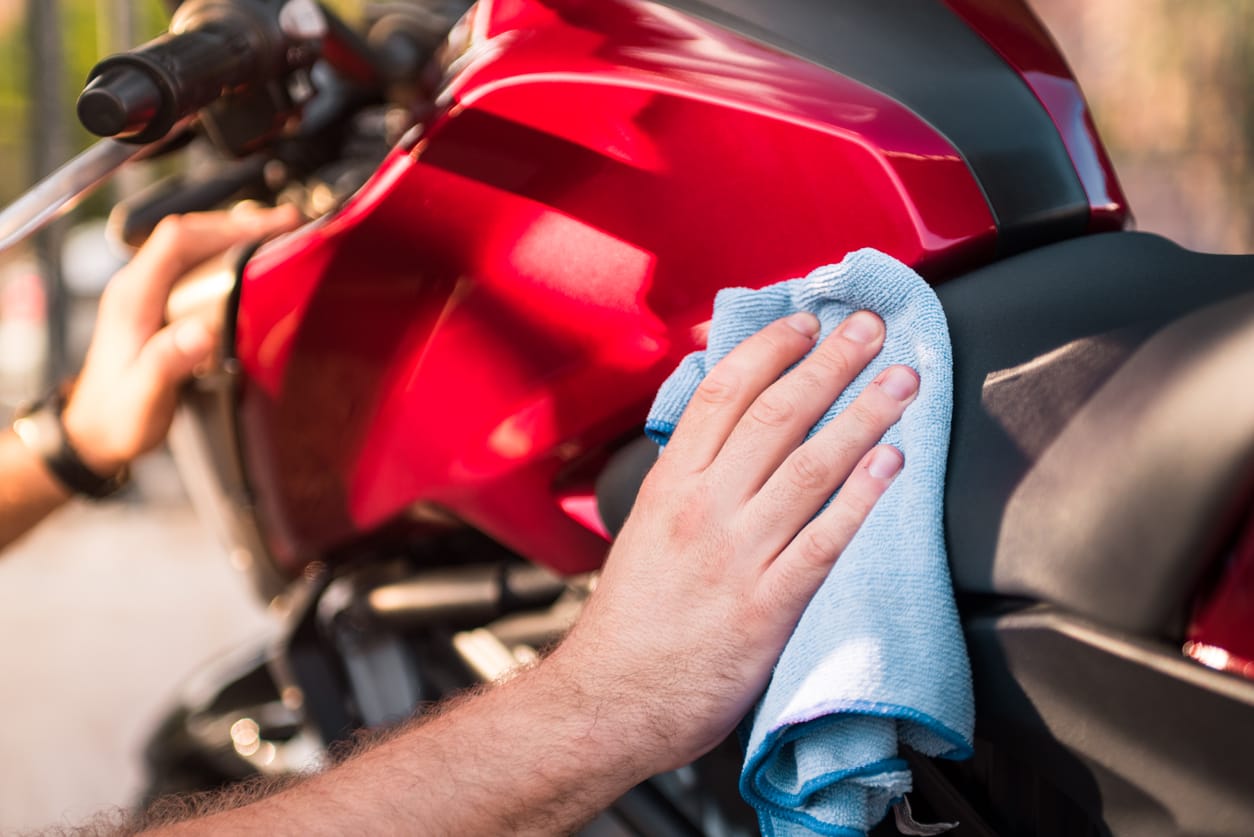
Wash the bike first, because scratches and stone chips do not show through road dirt.
Then photograph it thoroughly in daylight: both sides, tank, fairings, exhaust, wheels and rims, seat, controls and the odometer. Shoot close detail on any existing damage. This takes five minutes and it is the entire basis of a claim if one is ever needed.
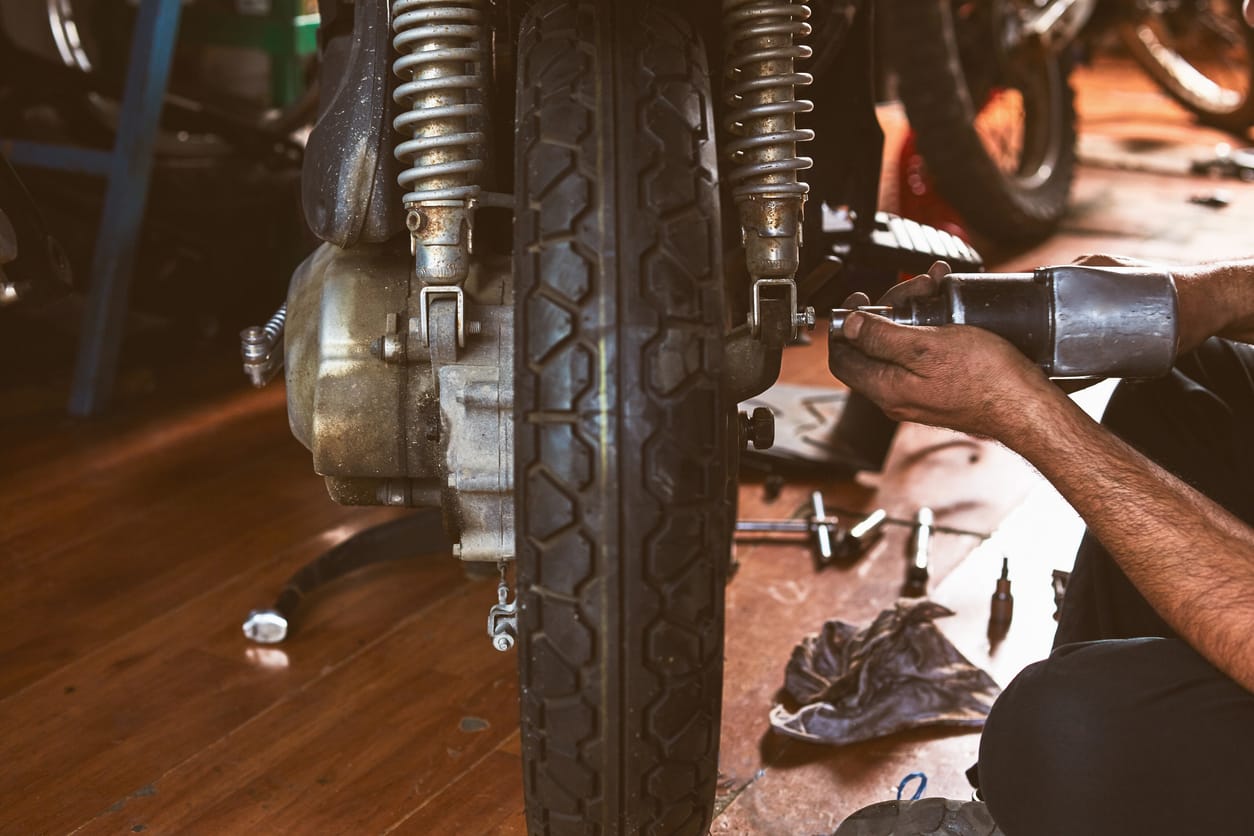
Read the condition report the driver completes at pickup, disagree at the time if anything is wrong, and keep your copy. At delivery, inspect before signing, in daylight if you possibly can.
How It Should Be Secured
Worth knowing so you can tell whether it has been done properly.
The front wheel goes into a chock so the bike cannot roll or fall sideways. Soft straps loop around solid points, usually the lower triple clamp area or the frame, never around brake lines, cables or plastic bodywork. The suspension is compressed slightly, which keeps the bike stable, but not bottomed out, which stresses the fork seals over a long trip.
Chains and hooks directly against paint, chrome or fork tubes are the thing to object to. Any carrier who handles bikes regularly already works this way, but it belongs in your booking instructions rather than in a conversation at the curb.
Access and Timing
A full size hauler needs room to park and load, and California residential streets in older neighborhoods frequently do not have it. Meeting at a nearby lot is standard practice and costs nothing extra.
Give a window of a few days rather than a single date. It gets you a better carrier and often a better rate, and on a westbound to eastbound move at the start of summer the network is busy. Our guide to motorcycle shipping covers how the process runs end to end.
Common Questions
Open or enclosed for a motorcycle? Enclosed for anything valuable, custom or freshly painted. Open is reasonable for a bike that already lives outside.
How much fuel should I leave? A quarter tank or less. Confirm with the carrier, since some prefer near empty.
Should I remove the windshield and bags? Yes, along with mirrors, mounts and anything not bolted down hard.
Can I leave a cover on? No. At highway speed a cover causes more paint damage than it prevents.
What about registering in the new state? Most states set a deadline after you establish residency, and some require inspection. Check the window and set your shipping date against it.
Get a Quote
Call Ship A Car, Inc. at (866) 821-4555 with both zip codes, your date range and the make and model of the bike, or request an estimate for the move through the quote calculator.