Shipping a Toyota Tundra: What Changes Versus a Car
A Tundra is a full-size pickup, and that costs money in three ways: size, weight and height. Expect roughly $150 to $300 more than a sedan on the same lane, because a carrier sells deck space and payload and a Tundra consumes more of both. Across the Toyota Tundra moves in our own book since 2023 the middle half ran $950 to $1,500, and the figures on this page are planning estimates rather than a quote. The bigger issue is modification. A lift kit, oversized tires, a roof rack or a bed rack can push the truck past the clearance a standard carrier deck allows, and that changes the equipment, the price and sometimes the availability.
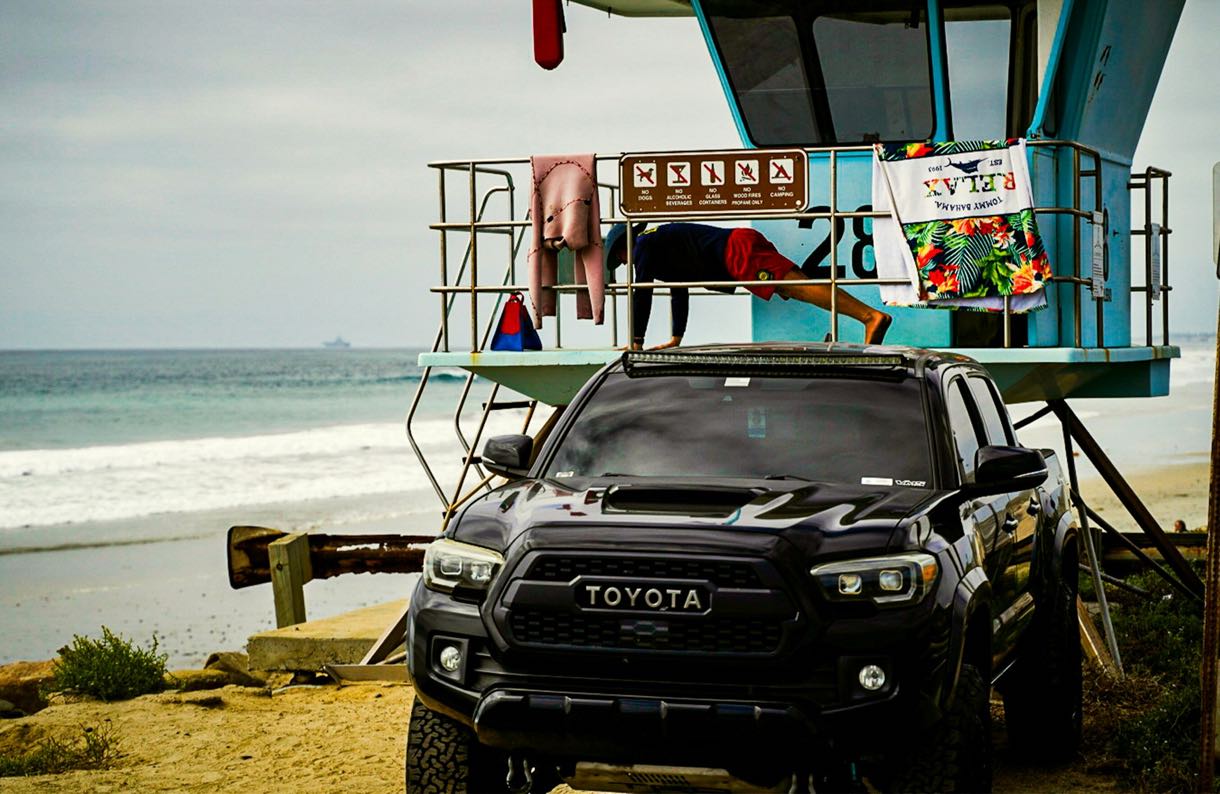
Measure It, Do Not Assume It
The single most useful thing you can do before requesting a quote is take three measurements and one weight. Carriers plan loads around them, and a surprise on pickup day is what causes repricing or a refused load.
- Height from the ground to the highest fixed point, including a roof rack, light bar or antenna if they do not come off.
- Length, which varies substantially across cab and bed combinations. A CrewMax with the longer bed is a materially different vehicle to plan around than a Double Cab.
- Width at the mirrors, and whether they fold.
- Curb weight from the door jamb sticker or the manual, not from memory.
Stock Tundras sit comfortably within what open carriers handle. It is the modified ones where the numbers matter, and the owner is usually the only person who knows what has been changed.
What It Costs
These are open-transport ranges for a stock Tundra outside peak season. A lifted or heavily accessorized truck sits above them.
A truck that will not start or roll adds roughly $100 to $250 for winching, and enclosed transport adds about a third. Flexibility on dates helps the schedule: an open pickup window fills faster than a fixed day.
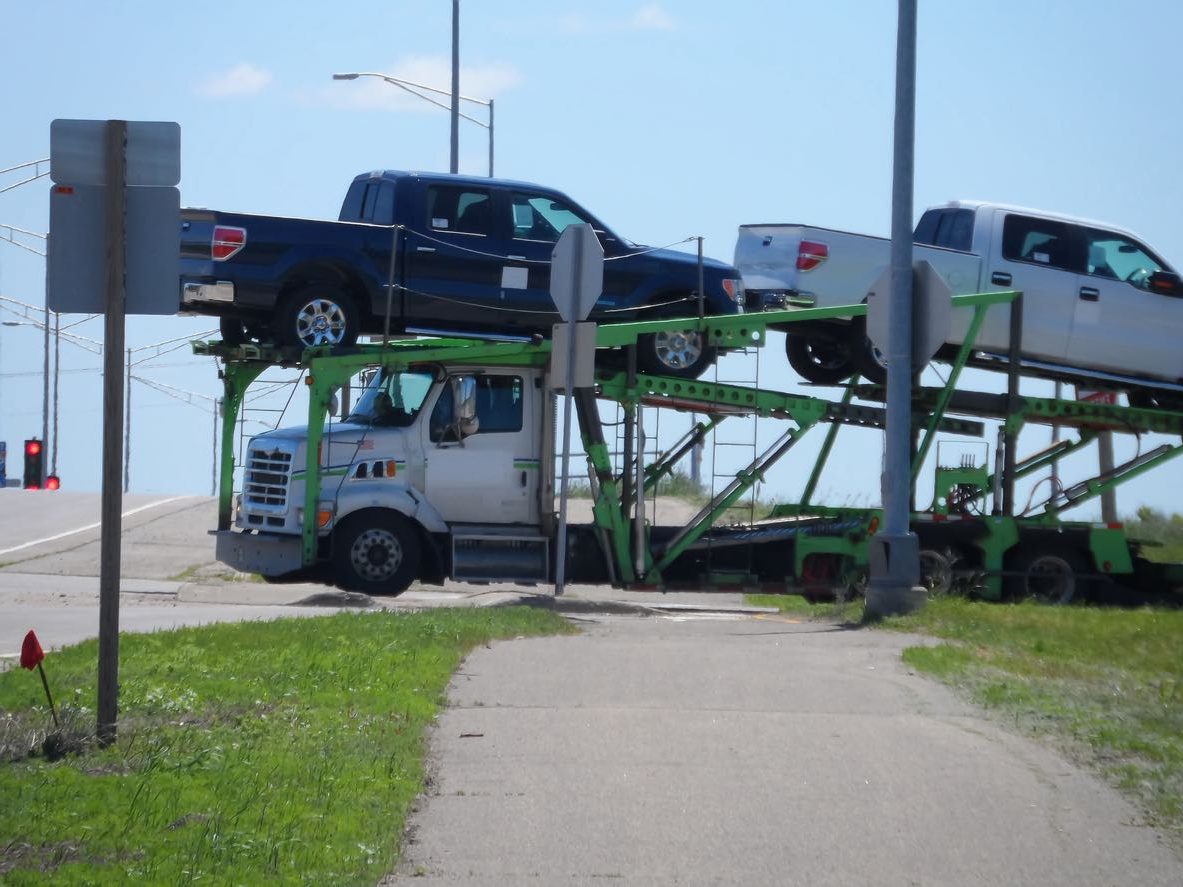
Where a Tundra Rides on the Trailer
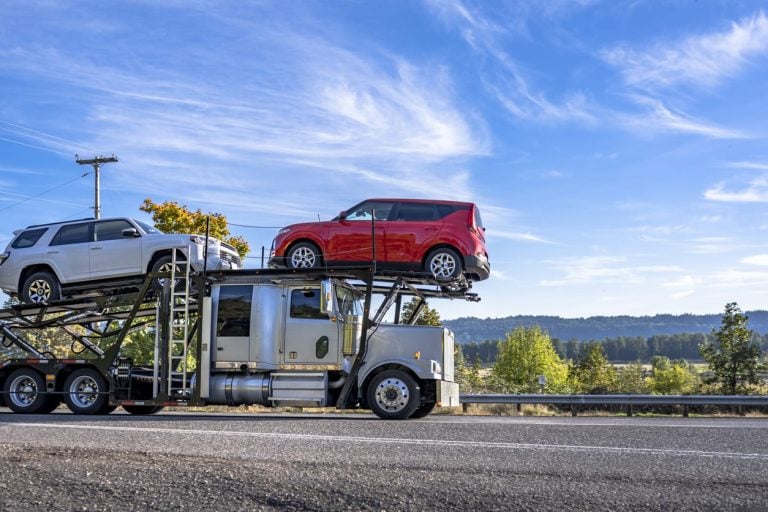
Open carriers have upper and lower decks, and the upper deck usually has less vertical clearance. Tall vehicles therefore tend to go on the bottom, which is fine but reduces the number of slots that will take your truck. Fewer eligible slots means a slightly longer wait for a match and slightly less competitive pricing.
This is why an honest height figure helps you rather than costing you. A dispatcher who knows your truck is 78 inches can place it confidently. One who finds out on the day that it is 84 inches with a rack has to solve a problem in a parking lot.
If Your Tundra Is Modified
Modified full-size trucks are common, and every change matters to the person planning the load:
- Lift kits and oversized tires raise the overall height, which is the measurement that decides deck placement.
- Roof racks, bed racks, light bars and rooftop tents add height and are the most commonly damaged items. Remove what comes off easily.
- Wide fender flares or aftermarket mirrors affect how tightly the truck can be positioned alongside others.
- Lowered trucks have the opposite problem: reduced ramp clearance, and a steep loading angle can contact a front air dam or exhaust.
- Aftermarket bumpers and winches add front weight and length, both of which the driver needs to know about.
None of these prevent shipping. They simply need declaring at quote time so the right trailer and slot are assigned.
Preparing the Truck
- Wash it, then photograph every panel, both bumpers, all four wheels, the roof, the bed and the odometer in daylight.
- Empty the bed completely, including tie-downs and anything in a toolbox. Loose items at highway speed damage other vehicles on the trailer.
- Leave about a quarter tank of fuel, since a Tundra’s tank is large and fuel is weight.
- Remove the toll transponder, fold the mirrors and retract or remove the antenna.
- Retract or secure a tonneau cover, and lower or remove a roof-mounted accessory where possible.
- Confirm the battery is good and the truck starts and rolls, and note any alarm or unusual starting procedure.
At delivery, inspect before signing. Compare the truck against the pickup condition report and your photographs, check the roof, bed rails and lower panels, start the engine, and note any exception on the bill of lading while the driver is present.
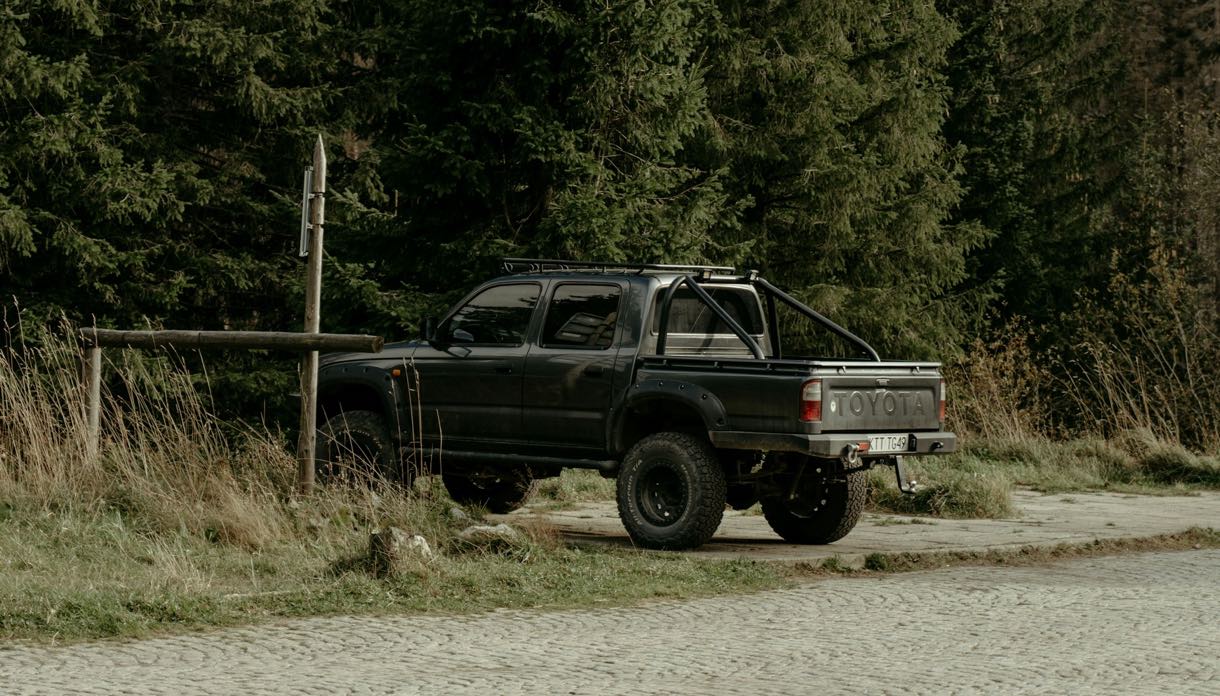
Open or Enclosed for a Pickup
Open transport is right for almost every Tundra. It is a working vehicle designed for weather, and it arrives dusty rather than damaged.
Enclosed makes sense in a few specific cases: a low-mileage or collector truck, a fresh custom paint or wrap, a heavily modified build where you want the accessories protected, or a winter move through salted states. Note that a tall lifted truck may not fit inside a standard enclosed trailer at all, so confirm interior clearance before assuming enclosed is available.
Common Questions
Why does a Tundra cost more than a sedan? Size and weight. A carrier is limited by both deck space and legal axle weight, so a full-size truck displaces more of the load than a compact car.
Can you ship a lifted Tundra? Usually yes on an open carrier, given the real loaded height. Very tall builds may need a specific trailer, and a standard enclosed trailer may not have the interior clearance.
Can I leave things in the bed? No. The bed must be empty. Trunk allowances, where a carrier offers them, do not extend to an open bed.
Does the hybrid version change anything? Slightly. It is heavier, so give the actual curb weight. Otherwise it ships identically to the non-hybrid.
Should I remove my roof rack? If it comes off easily, yes. It reduces the loaded height, opens up more deck slots and removes the item most likely to be damaged.
Get a Quote
Call Ship A Car, Inc. at (866) 821-4555 with the year, cab and bed configuration, curb weight and loaded height, or request an estimate for the move through the quote calculator.