
Ten Reasons to Ship a Car Instead of Driving It, Beyond the Money
The cost comparison gets all the attention, and it is usually the weakest reason to ship a car. The math swings both ways with fuel prices and distance. The reasons that do not swing are about wear, risk and what your days are worth, and those are the ones people discover after the drive, not before.
The dollars-and-cents version lives in our page on shipping versus driving it yourself. This is everything else.

1. The Miles Themselves
A cross-country drive puts 2,500 to 3,000 miles on the odometer in a week. On a leased car that is real money against the allowance; on a car you just bought, it is depreciation you paid to inflict; on any car, it is a year’s oil-change interval spent in seven days. Transport adds zero.
2. The Wear You Cannot See
Tires, brakes, wipers and a windshield’s worth of stone exposure: a long drive consumes all of them. The windshield is the sleeper: one semi on a gravel-strewn interstate, and the trip’s savings are a glass claim.
3. Breakdown Risk in the Middle of Nowhere
A failure at home is an inconvenience; the same failure 400 miles from the nearest city you know is a tow at rural rates, a motel booked at desperation prices, an unfamiliar shop quoting a stranger, and days of delay you did not budget. The costs stack in a way no spreadsheet anticipates, because each one is priced at its worst. Older cars, recent purchases with unknown service history, and anything temperamental raise this from a possibility to a planning factor, and a car you have owned for one day, bought sight unseen, is exactly the car most likely to be making this trip.
4. The Accident Exposure Nobody Prices
Two or three thousand miles of unfamiliar roads, in weather you did not choose, tired, is the highest-risk driving most people do all year. Professional car haulers do this daily, and the vehicle rides above the traffic instead of in it.
5. Days Off Are the Real Currency
A coast-to-coast drive costs four to six days one way. For most working people that is vacation time, spent on an interstate. Even when the raw math favors driving, pricing your leave at what it is worth usually reverses it.
6. The One-Way Problem
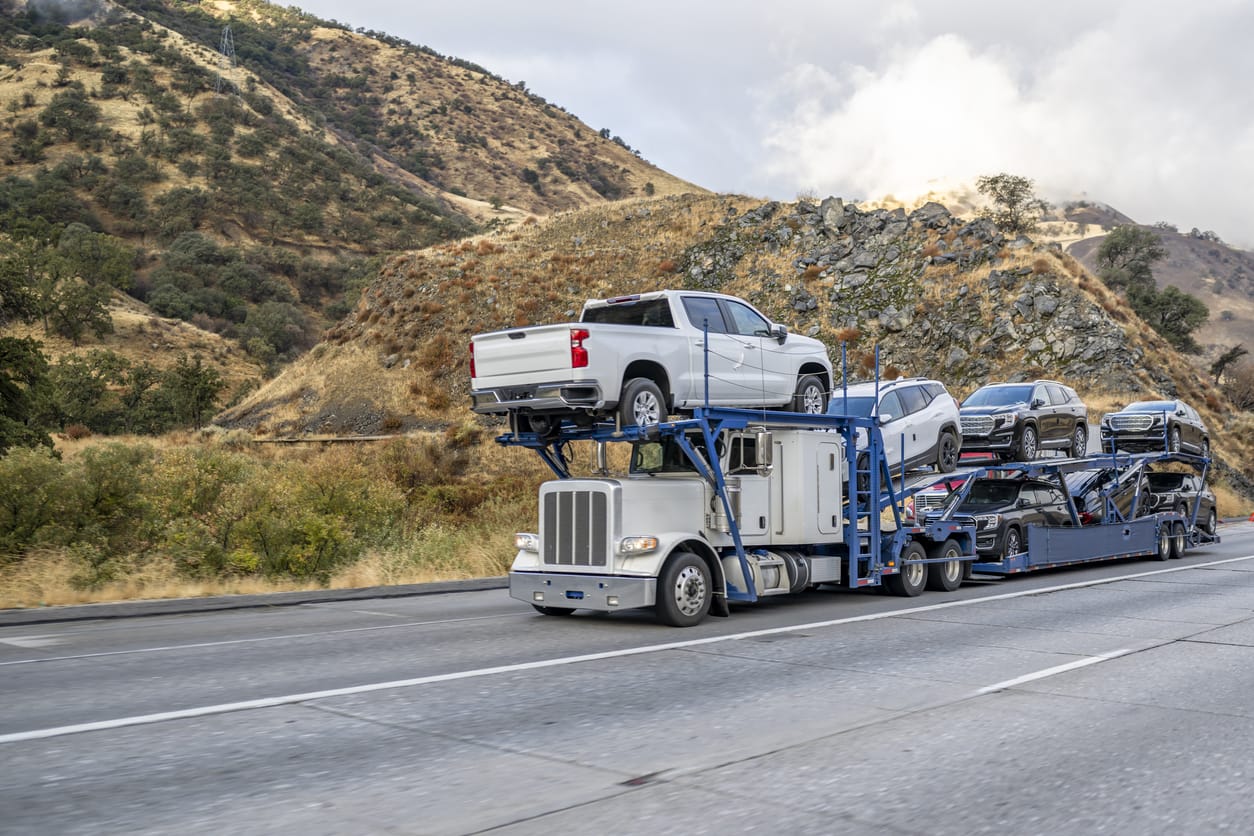
Delivering a car somewhere means getting yourself back. A one-way flight, or a second driver whose time and return you also owe. Shipping breaks the link: the car travels, you fly once, nobody caravans a second vehicle across Nebraska.
7. Two Cars, One Household
Relocating families hit this immediately: two cars cannot be driven by one person. Convoying sounds workable until it is real: two drivers who cannot talk to each other, two sets of fatigue on different schedules, separate fuel stops that double every break, and a multi-day trip spent watching a rear bumper instead of the country. Shipping at least one car dissolves the whole problem. Most relocations ship the second car and drive the first, or ship both and make the move a single flight sitting together.
8. Cars That Should Not Make the Trip
Classics, low-clearance cars, anything with a known issue, a project that runs but should not be trusted, a lease return that must arrive with low miles. For a real share of vehicles, the long drive is not a cheaper option. It is a gamble with the thing you are trying to move.
9. Weather Windows You Do Not Control
The drive happens on your calendar, which means January mountain passes, summer desert crossings, and hurricane-season coasts happen to you, on whatever day the lease starts or the job begins. A carrier’s schedule flexes around weather as a matter of routine, with a delayed departure or a rerouted lane, and the car rides through the rest of it strapped to a deck rather than driven through it by someone who has been awake since Albuquerque. Winter is the season where this reason quietly climbs the list, because road salt and black ice tax the car and the driver at the same time.
10. Arriving Ready Instead of Recovering
The unglamorous one that matters most in a relocation: the days after arrival are for leases, utilities, schools and a new job, not for recovering from the drive. Shipping means you land rested with the move’s hardest week still in your pocket.
What Driving Still Wins
Honesty requires the other side. Under about 500 miles, driving usually wins outright. If the trip itself is the point, the national-parks route or the family drive, that is a vacation, not a transport problem. And if your dates are immovable and capacity is tight, your own steering wheel is the one schedule you fully control.
The break-even lives further out than most people guess, and it moves year to year with fuel, motel rates and airfares, which is exactly why the one-time math is worth redoing for your actual route rather than trusting a rule of thumb. Run the honest total, including fuel, lodging, meals, the flight you avoid, and the leave you spend, before deciding the math is obvious.
Common Questions
Is shipping cheaper than driving? Over long distances, frequently, once lodging, meals, the return trip and leave days are counted. The full math is in our shipping-versus-driving guide.
What is the strongest non-cost reason? Risk concentration: a long unfamiliar drive is the highest-risk driving most people do, and it puts every mile on your own car.
When should I clearly drive instead? Under roughly 500 miles, when the drive is the vacation, or when immovable dates make your own schedule the priority.
Does shipping add miles or wear? None. The car rides secured on a trailer; only loading moves it.
How do relocating families usually handle two cars? Ship one and drive the other, or ship both and fly. Convoying is the option everyone regrets.
Get a Quote
Call Ship A Car, Inc. at (866) 821-4555 with both zip codes and your date range, or price the move with the instant calculator.