NYC Congestion Pricing: What It Means for Shipping a Vehicle Into Manhattan
Congestion pricing is now a fact of life below 60th Street in Manhattan, and for anyone shipping a vehicle in or out of the city it changes two practical things: what a carrier will agree to do, and where the vehicle actually changes hands. The toll itself is a smaller factor than most people expect. The bigger effect is on carrier behavior.
How the Program Works
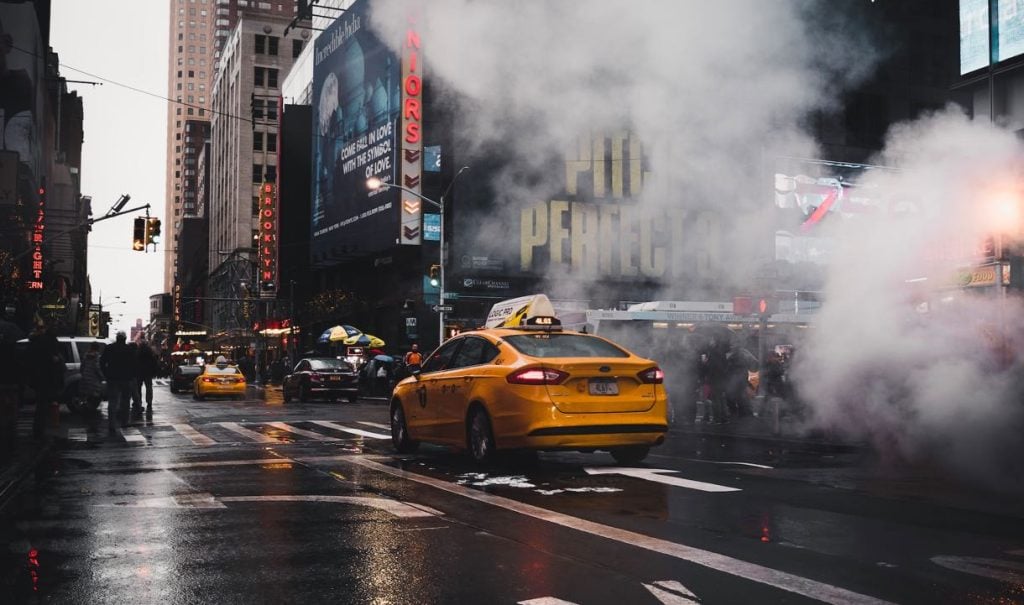
The charge applies to vehicles entering the Congestion Relief Zone, which is Manhattan from 60th Street south, excluding the through routes along the edges. It is collected electronically, so there are no booths and no stopping.
Rates vary by vehicle class and by time of day. Passenger vehicles pay one rate, small trucks more, and large trucks and buses the most, on the logic that a truck occupies more road than a car. Overnight and off peak crossings are charged at a substantially lower rate than peak hours, which is the single most important detail for freight.
Rates and exemptions have been adjusted since the program began and are subject to further change, so confirm the current schedule rather than relying on a figure you read somewhere. What has not changed is the structure: by class, by time, collected electronically.
Why It Affects Car Shipping More Than the Toll Suggests
A single toll spread across a truckload of vehicles is a small number per car. That is not what makes Manhattan difficult.

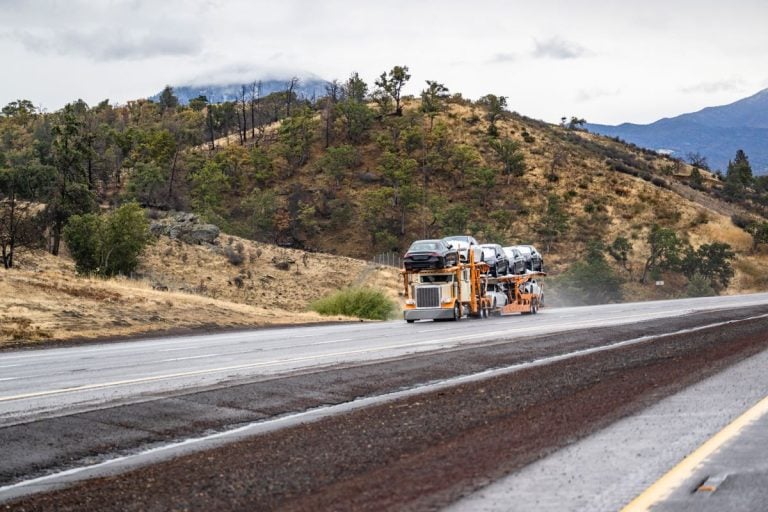
A loaded car hauler is around 75 feet long and 13 feet 6 inches tall. Lower Manhattan has narrow streets, constant double parking, low clearances, restricted truck routes and nowhere to stop legally for the twenty minutes it takes to unload a vehicle. That was true before congestion pricing and it is true now.
What the charge adds is another reason for a carrier to decline the trip or to price it higher, particularly on top of the tolls already required to reach the city at all. Many carriers simply will not take a full size rig below 60th Street, and that is a routing decision rather than an unwillingness to serve you.
Where the Vehicle Actually Changes Hands
This is the practical answer, and it is the same answer good carriers were already giving before the program started.
Delivery and pickup for Manhattan addresses generally happen outside the zone. Common meeting points are in New Jersey near the crossings, in the outer boroughs where there is room to park a truck, or in Westchester. From there the vehicle is driven the last few miles.
The Bronx, Queens, Brooklyn and Staten Island are unaffected by the zone and are ordinary delivery territory, subject to the usual question of whether a specific street can take a 75 foot truck.
Agree the meeting point when you book. It is the single most common cause of a wasted trip in this market, and it is entirely avoidable.
Timing Works in Your Favor
Because the rate structure is time based, an off peak or overnight movement costs meaningfully less to the carrier and is easier to execute.
Traffic is lighter, there is somewhere to park a truck, and the charge is lower. If you can be flexible about an early morning or evening handover, say so when you book, because it improves both the price and the chance of a carrier accepting the job.
The same logic applies to the day of the week. Midweek is easier than a Friday, and the weeks around major holidays are worse in New York than almost anywhere else in the country.
The Wider Regional Picture
New Jersey opposed the program from the start, on the argument that commuters and freight crossing the Hudson would carry a disproportionate share of the cost, and litigation over it has run alongside the program’s operation. Federal opposition has added further uncertainty.
For a shipper the takeaway is practical rather than political: the rules governing this zone have changed more than once and may change again. Confirm the current position when you book rather than assuming what was true last year still holds.
What is stable is the underlying constraint. Manhattan is a difficult place to operate a 75 foot truck, congestion pricing or not, and the answer has always been to hand the vehicle over somewhere a truck can legally and safely stop.
Freight and Commercial Moves
If you are moving something heavier than a car into the city, the calculation shifts, because the charge scales with vehicle class.
Large trucks and buses pay the highest rate, and the gap between peak and overnight is wide enough that scheduling has become a real lever on delivery cost. Construction equipment, machinery and anything moving on a lowboy is already subject to New York City permit requirements and restricted truck routes, and the zone adds another layer on top of that.
Plan those moves overnight where the receiving site allows it. Confirm the truck route, the permits and the site access before the day, because in this city a load that arrives without a legal place to stop does not simply wait, it leaves.
Preparing the Car
Wash it so existing marks are visible, then photograph every panel in daylight, including the wheels, the lower bumpers and the rocker panels, which are what loading marks.
Leave about a quarter tank of fuel. Empty the cabin and the trunk, since personal items are not covered by cargo insurance and they add weight. Fold the mirrors, disable a motion sensitive alarm and hand over a key. Remove the toll transponder, which matters more here than anywhere else, since a transponder riding on a truck through this region will be read repeatedly and billed to you.
At delivery, inspect before signing. Compare against your photographs and note anything unexpected on the bill of lading while the driver is present. Our guide to New York car shipping covers the state more broadly.
Common Questions
Does congestion pricing make shipping my car much more expensive? Not by much on its own. Spread across a full truck the toll is small. The bigger effect is that some carriers decline Manhattan entirely.
Can a car hauler deliver to my Manhattan address? Usually not, and that was true before the program. Expect a meeting point in New Jersey, the outer boroughs or Westchester.
Are the outer boroughs affected? No. The zone is Manhattan below 60th Street. Brooklyn, Queens, the Bronx and Staten Island are ordinary delivery territory.
Is an overnight handover cheaper? It is easier and the charge is lower off peak, so an overnight handover genuinely helps with both the charge and availability.
Should I remove my toll transponder? Yes, always, and especially on this lane. A transponder in a car on a truck gets read repeatedly and billed to your account.
Get a Quote
Call Ship A Car, Inc. at (866) 821-4555 with both zip codes and how flexible you can be on the handover time and place, or request an estimate for the move through the quote calculator.