The Internal Combustion Engine Is Not Finished
Where things actually stand: several automakers have pushed back their all-electric target dates and kept investing in efficient gasoline engines, while hybrids have taken a growing share of sales as buyers weigh charging access, cold-weather range, and price. That is not a reversal of electrification so much as a longer, messier transition than the 2021 forecasts assumed.
Why Buyers Slowed Down
The reasons are practical rather than ideological. Public charging remains uneven outside metro areas. Cold weather reduces usable range noticeably. Purchase prices are still higher than comparable gasoline models for many segments. And for anyone without home charging, an EV changes daily routine in ways a hybrid does not.

Hybrids answer most of those objections without asking the owner to change anything, which is why they have absorbed much of the demand that forecasts had assigned to full EVs.
The Engine Itself Kept Improving
Turbocharging and direct injection let smaller engines do the work of larger ones. Cylinder deactivation shuts down cylinders under light load. Better transmissions keep engines nearer their efficient range. None of it makes combustion clean, but a modern gasoline engine is substantially more efficient than one from fifteen years ago, and that progress has continued while attention was elsewhere.
What It Means When You Ship a Vehicle
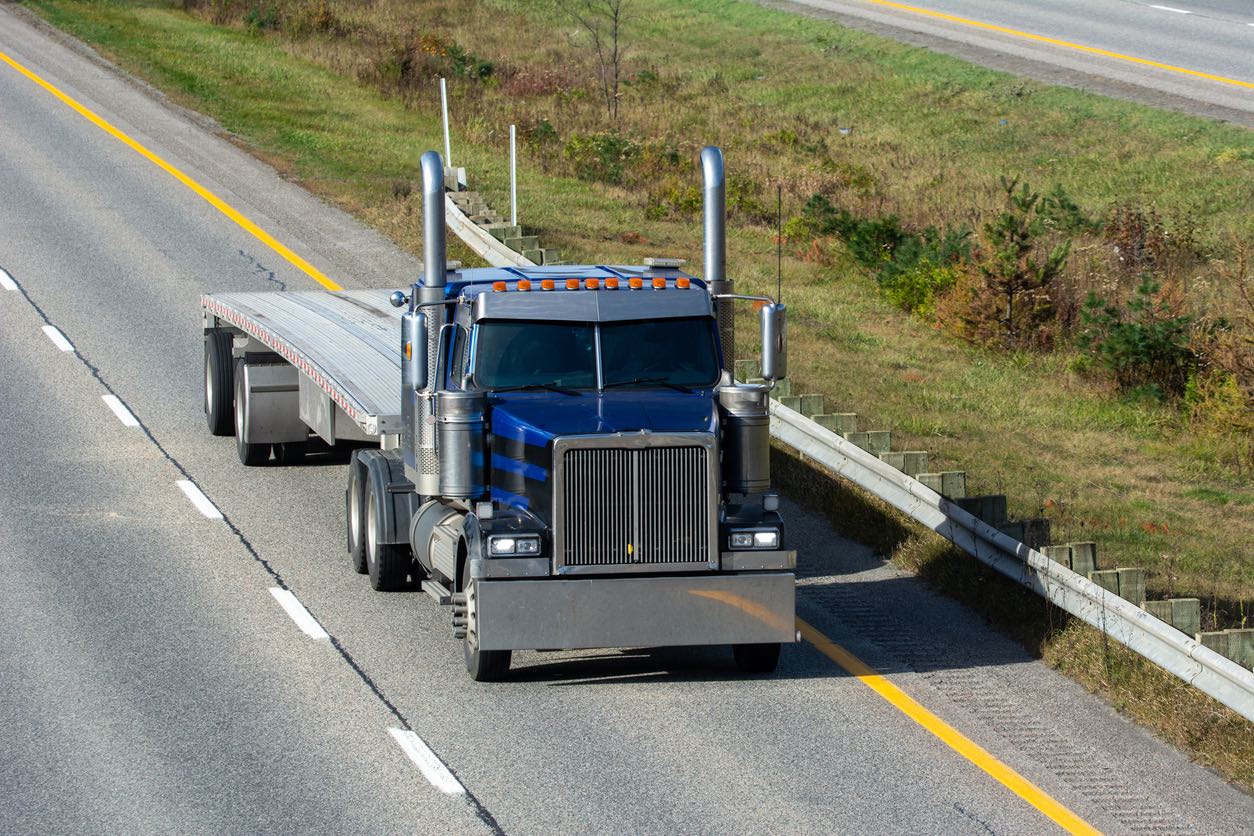
Very little, and that is worth saying plainly. Gasoline cars, hybrids, and EVs all ship on the same open and enclosed carriers. Two differences apply:
- Weight. EVs are typically several hundred pounds heavier than a comparable gasoline model, and carriers sell deck space by weight, so the quote can run slightly higher.
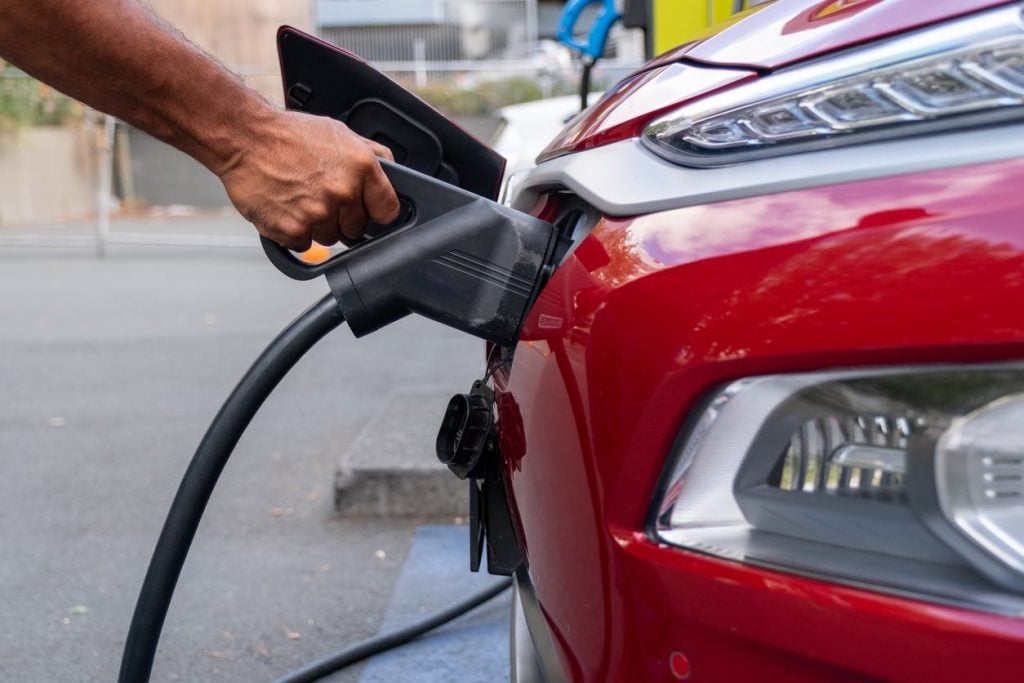
- State of charge. Bring an EV to pickup with roughly 30 to 50 percent charge rather than the quarter tank we ask for on a gasoline car. Enough to load, unload, and drive away; not so much that it sits full for a week.
Beyond that, the process is identical: book one to four weeks ahead, empty the vehicle, and document its condition at pickup.
What Changed in the Forecasts
Around 2021 a number of manufacturers announced firm dates for all-electric line-ups. Several of those dates have since been softened or dropped, and capital has been redirected toward hybrids and toward continued development of efficient combustion engines. Production targets have been trimmed at multiple automakers.
It is worth being precise about what this is and is not. It is not evidence that electrification has failed; EV sales have continued to grow in absolute terms. It is evidence that the transition curve was drawn too steeply, and that the intermediate step, hybrids, is doing more of the work than planners expected.
Why Hybrids Absorbed the Demand
A hybrid asks nothing of the owner. There is no charging routine, no range calculation before a long drive, no dependence on public infrastructure of variable reliability. It delivers a substantial fuel-economy improvement in exactly the stop-start driving where combustion is least efficient, and it costs less than a comparable battery EV.
For a household without home charging, which is a large share of American drivers, particularly renters and apartment dwellers, a hybrid is simply the more practical purchase today.
The Regulatory Backdrop
Emissions and fuel-economy rules continue to tighten, which is the underlying force pushing manufacturers toward electrification regardless of consumer pace. Where those rules land, and how quickly, remains politically contested and varies by state, with California’s standards historically setting a stricter track that other states may adopt.
The practical effect for a buyer is that the vehicle mix on dealer lots will keep shifting toward hybrids and EVs over time, even where demand alone would not push it that fast.
Common Questions
Does an EV cost more to ship than a gasoline car? Slightly, in most cases. Carriers sell deck space by weight, and an EV is typically several hundred pounds heavier than a comparable combustion model. The difference is modest, not dramatic.
What charge level should an EV arrive with? Roughly 30 to 50 percent. Enough to load, unload, and drive away, without sitting at full charge for a week.
Are there restrictions on shipping EVs? Not for standard road transport. Some ocean carriers have introduced state-of-charge limits for vehicles traveling by sea, which matters for Hawaii, Alaska, and international shipments. Mention the powertrain when booking those.
Do hybrids need anything special? No. Treat them like a gasoline vehicle, roughly a quarter tank, and note any keyless start procedure for the driver.
Get a Quote
Whatever is under the hood, call Ship A Car, Inc. at (866) 821-4555 or use the quote calculator.