How to Ship an Antique or Classic Car
An antique car is not simply an expensive car, and the difference matters at exactly two moments: when it is loaded, and when a claim is assessed. Ground clearance, an unpredictable drivetrain and parts that no longer exist are what separate this from an ordinary vehicle move.
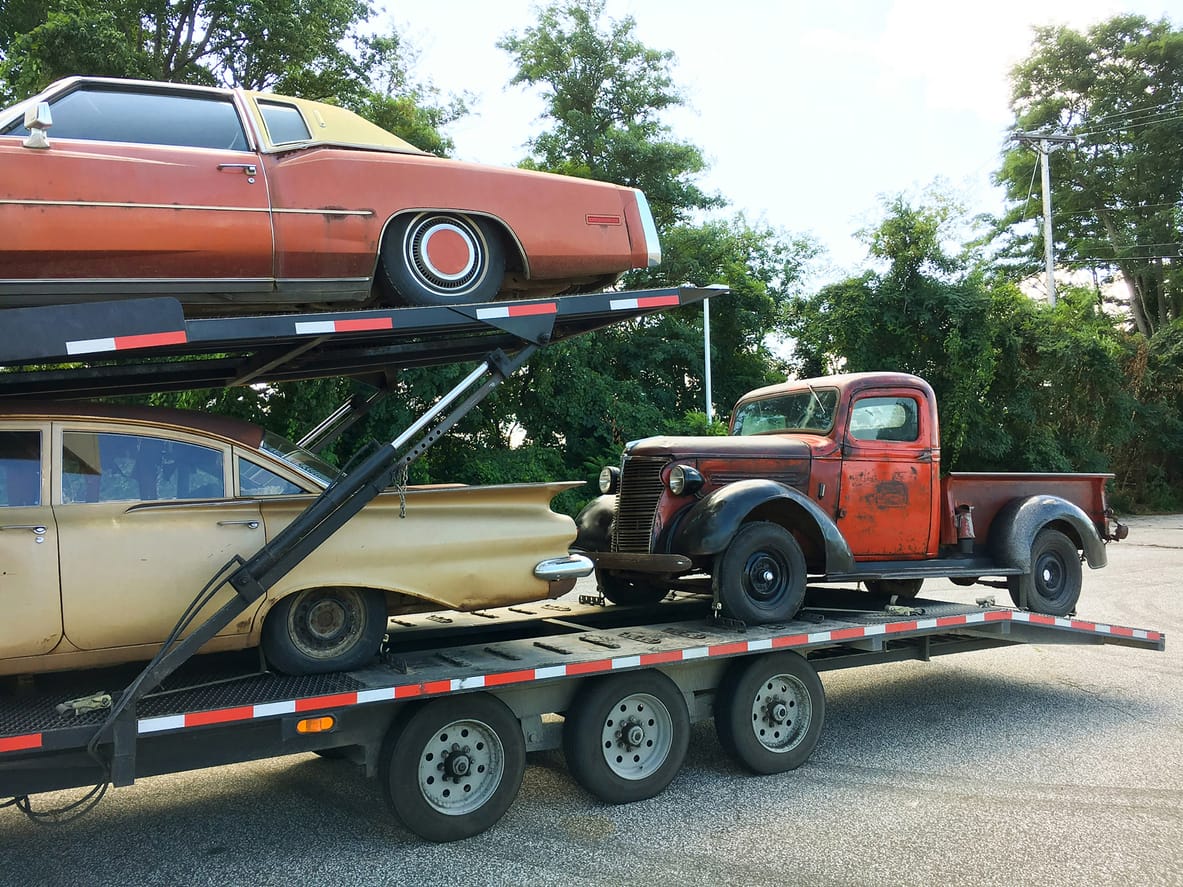
Enclosed, and Usually With a Lift Gate
For a genuine classic, enclosed transport is the correct answer rather than the premium one, and the reasons are practical.
An open trailer exposes the car to road debris at highway speed, which is what chips paint and cracks glass, and to weather that original trim and chrome do not tolerate the way modern finishes do. It also puts a recognizable car on public display at every truck stop.
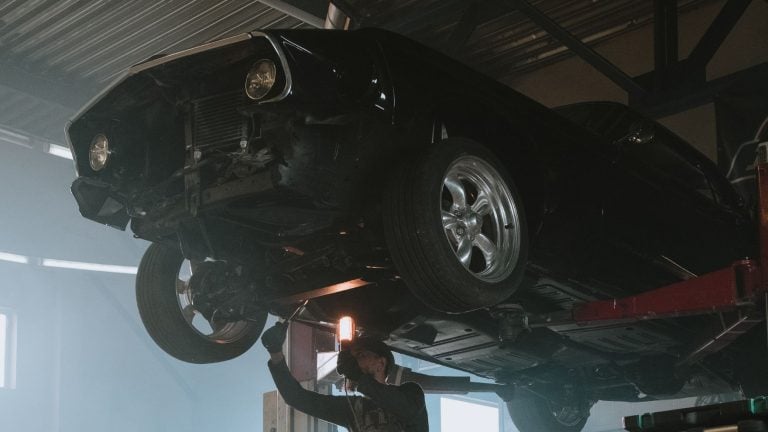
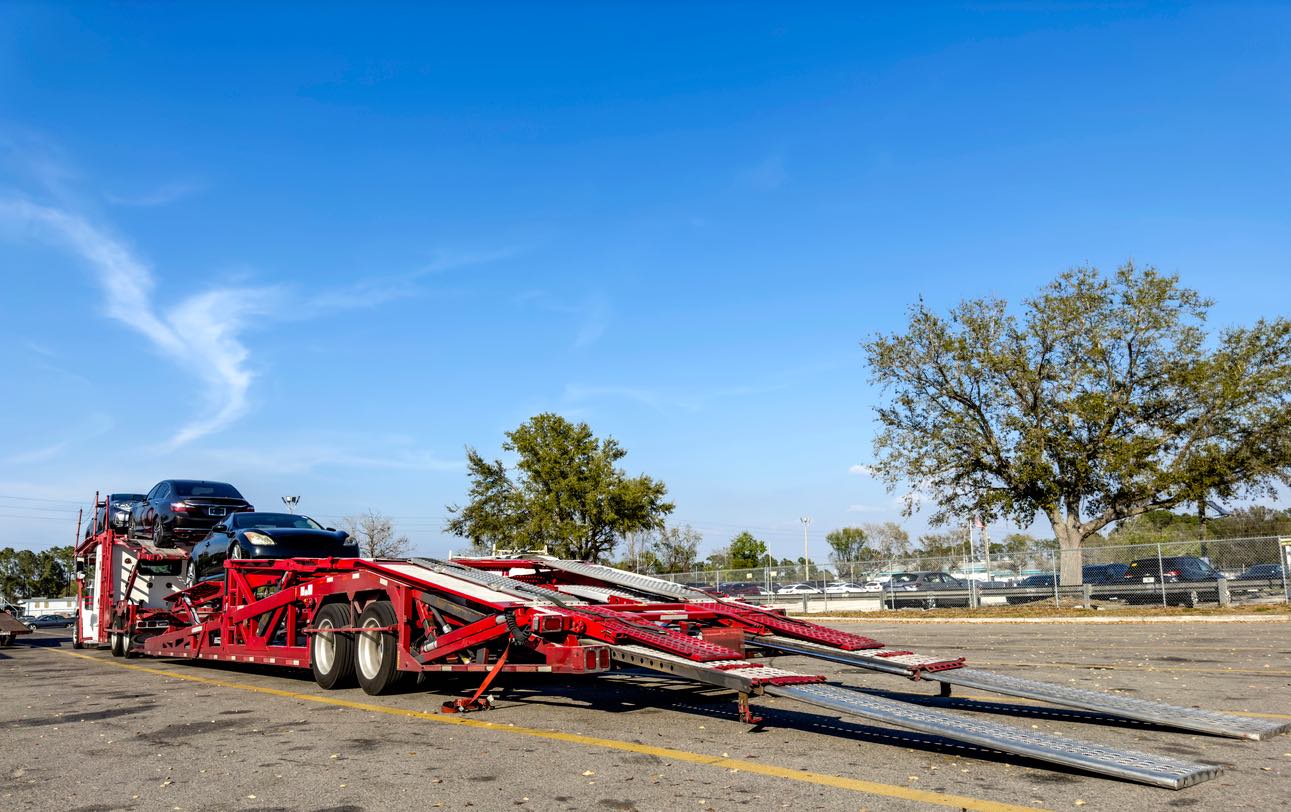
The feature worth insisting on is a hydraulic lift gate. Rather than driving up ramps, the car sits on a platform raised level with the deck, which removes the approach angle entirely. Many classics have low front valances, long overhangs and exhausts that hang below the frame, and the damage happens in the first ten feet.
If the car has under five inches of clearance, or a splitter, or you simply do not want it driven up a ramp, say so at booking rather than hoping.
Tell Them How the Car Actually Behaves
This is the part owners skip and it causes more damage than anything else.
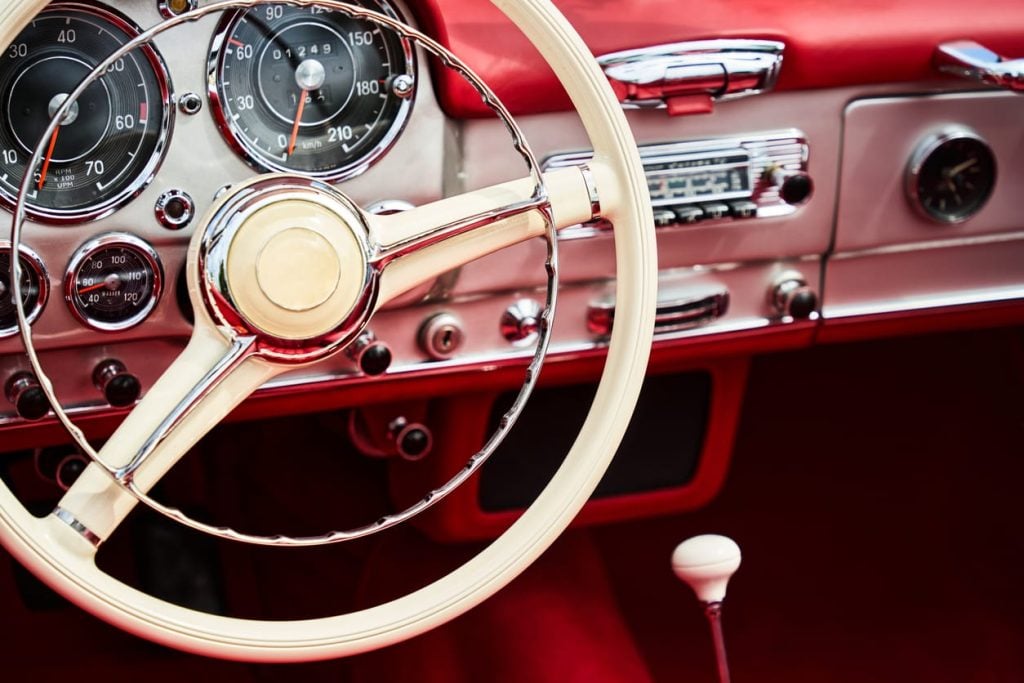
A driver who has never handled your car needs to know: a hidden kill switch or battery cutoff, a choke or fuel tap that must be set, a starter that needs a particular sequence, a manual gearbox with an unusual pattern or a lift collar for reverse, drum brakes that need pumping, and non synchronized gears that will not simply select.
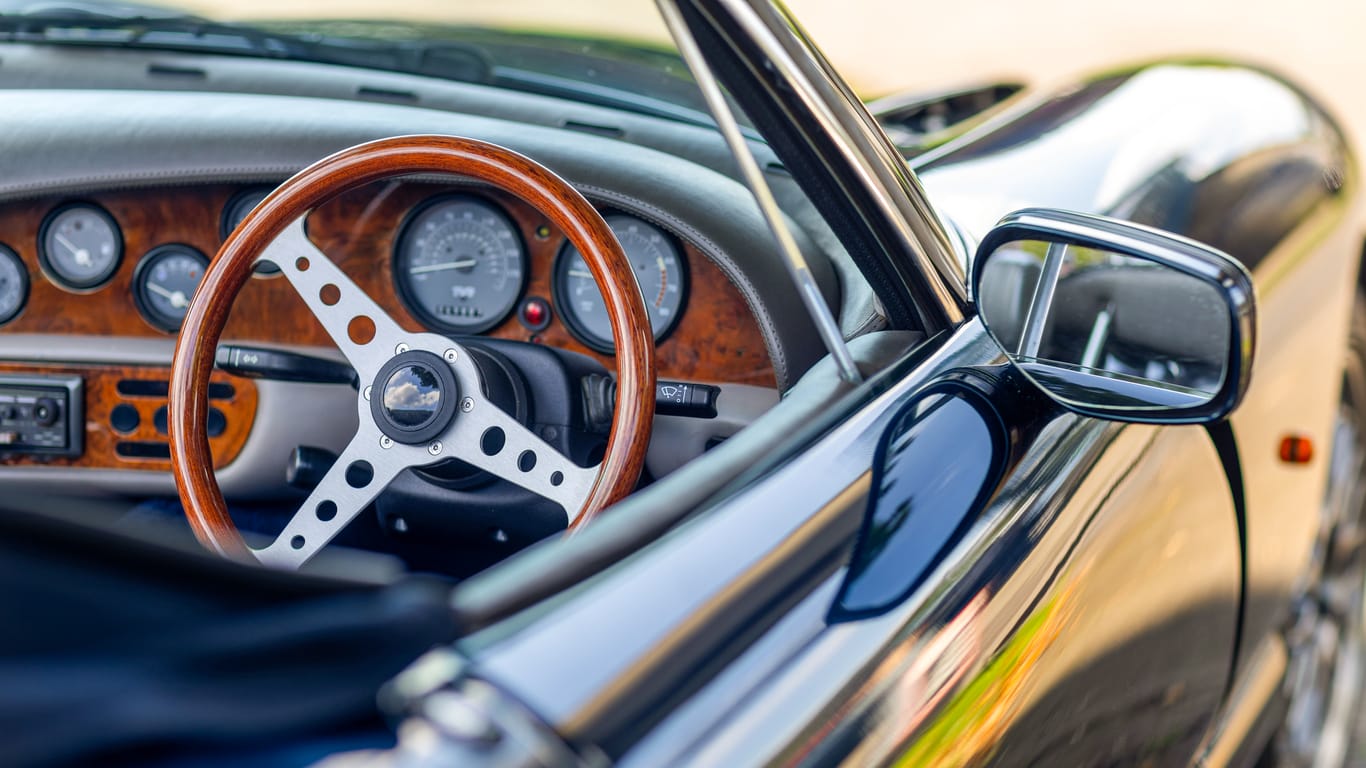
Write it down and hand it over with the key. None of it is unusual to somebody who moves classics regularly, and all of it causes trouble when a driver improvises with a car they do not understand.
If the car does not run, be precise about what that means. A car that rolls, steers and brakes can be winched. One that does not roll, or has no brakes, needs a forklift or a rollback and is a much narrower search.
Booking Around the Show and Auction Calendar
Classic car transport has its own seasonal pattern, and it is sharper than the general market because it clusters around events.
The major auctions in Arizona in January, Florida in March and Monterey in August pull enclosed carriers and lift gate equipment onto those lanes and hold them there for weeks. Regional show season through spring and summer does the same on a smaller scale.
If your move coincides with one of those, book six to eight weeks ahead rather than two, because the specialist equipment is genuinely finite and it commits early. Outside those windows, two to four weeks is usually comfortable.
There is an upside to the pattern worth knowing. Carriers running to an auction frequently have space on the return leg, so a move in the opposite direction to the event traffic can be both cheaper and quicker to assign. It is worth asking about specifically rather than assuming the rate is fixed.
Insurance Is Where Value Gets Decided
Every carrier holds cargo insurance, and every policy has a per-vehicle limit. For an ordinary car that limit is never the binding constraint. For a classic it frequently is.
Ask for the certificate of insurance and check the per-vehicle figure against what the car is actually worth. If there is a gap, close it before the car moves rather than after something happens.
Agreed-value coverage is the thing to ask about specifically. Disputes over classic cars are rarely about whether damage occurred; they are about what the car was worth, and a documented agreed value removes that argument entirely.
Keep your own collector policy active throughout, and check whether it covers the vehicle in transit, because some do and some explicitly do not.
Documentation Is the Claim
Photograph the car properly before it loads: every panel in daylight, the wheels, the underside of the front valance, the interior, the engine bay, the odometer, and any existing marks in close-up.
On a car with original paint, photograph the finish in raking light so its actual condition is recorded rather than implied. That set of images is what settles a claim, and on a vehicle where nothing can simply be replaced it is worth twenty minutes.
At pickup, read the bill of lading before signing and make sure existing damage is described specifically rather than as general wear. At delivery, inspect before signing, in daylight if at all possible, and write any discrepancy onto the document while the driver is present.
Preparing the Car
Wash it so existing marks are visible. Leave about a quarter tank of fuel, and no more, since fuel is weight and a full tank on a car that will sit for days is no advantage.
Empty the cabin and the trunk. Fold the mirrors, disable any alarm and hand over a physical key plus any secondary key the car needs.
Check for leaks and fix or declare them, because a drip that is a nuisance in your garage is a problem on somebody else’s trailer with another car below. Make sure tires hold pressure, since a soft tire makes a car much harder to secure properly.
Ask how the car will be tied down. Over the wheels with soft straps is right; chains on suspension or chassis points are how classic cars get damaged. Our guide to shipping a car with low ground clearance covers the loading question in more detail.
Common Questions
Do I need enclosed transport? For a genuine classic, yes. Road debris, weather and visibility are all real, and original finishes tolerate them poorly.
What is a lift gate and do I need one? A platform that raises the car level with the deck instead of using ramps. Anything under about five inches of clearance wants one.
How should it be secured? Over the wheels with soft straps. Chains on suspension or chassis points cause damage.
What insurance should I check? The carrier’s cargo policy per-vehicle limit, and whether agreed-value cover is available for the actual worth of the car.
What if it does not run? Say precisely what that means. Rolls and steers can be winched; no roll or no brakes needs different equipment entirely.
Get a Quote
Call Ship A Car, Inc. at (866) 821-4555 with the year, make and model, the measured ground clearance, the value of the car and whether it runs and drives, or price the move with the instant calculator.