Buying at a Collector Car Auction: Getting It Home
Arrange transport before you bid, not after you win. Auction houses give buyers a short window to clear the vehicle, commonly a matter of days, and storage charges start when it closes. Meanwhile every other winning bidder is calling the same carriers in the same week, and enclosed capacity around a major sale is the tightest it ever gets. The people who have a smooth experience are the ones who booked provisionally before the hammer fell.
The Calendar Is the Whole Problem
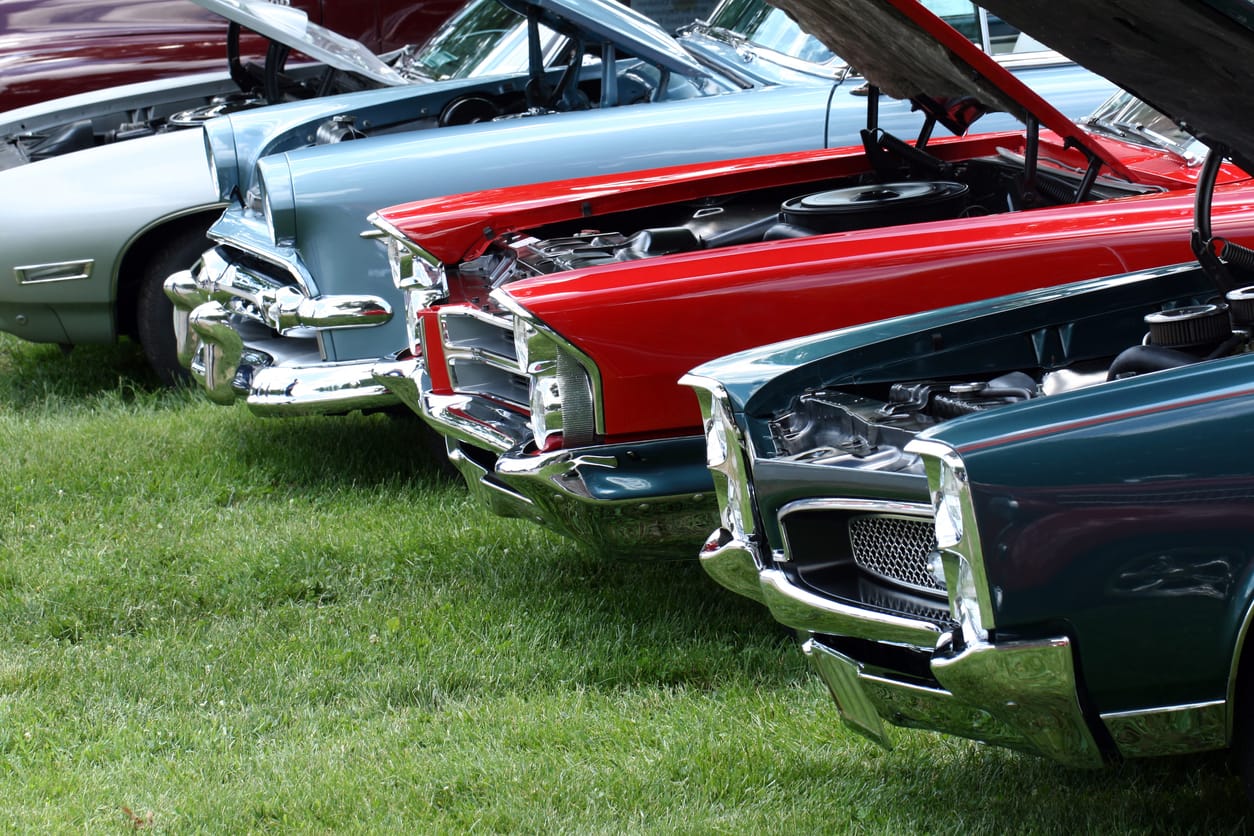
Collector auctions cluster. January in the Phoenix and Scottsdale area is the largest concentration in the world, and there are similar pinch points around Monterey in August, Amelia Island in the spring, and the big Indiana and Pennsylvania sales. In those weeks thousands of vehicles change hands in a few days within a few miles of each other.
The transport consequence is severe and narrow. Enclosed carriers serving the area book out weeks ahead, rates rise, and last-minute availability effectively vanishes. Open capacity is affected too, though less so.
Book six to eight weeks out for a major sale, not three. If you do not win, a good coordinator will release the slot; that is a far better position than winning and having nowhere to put the car.
Know the Clock Before You Bid
Every auction house sets its own removal deadline and storage rate, and they are published in the buyer’s terms rather than announced from the block. Read them before the sale.
Release Paperwork Stops More Collections Than Weather
A carrier arriving to collect a car that has not been released leaves without it, and you pay for the wasted trip. Release usually requires cleared payment and written authorization naming the transport company, sometimes the driver.
Give the auction house your carrier’s details as soon as you have them, and confirm the authorization is on file rather than assuming payment alone is enough. This is the single most common reason an auction collection fails.
Assume It Does Not Run
Plenty of auction cars are sold as running and driving. Plenty are not, and some that are described as running have sat for months and will not start on the day. A car bought sight-unseen from a catalog photograph is a particular risk.
Tell your carrier the car may be a non-runner even if it is listed as running. A winch or liftgate arriving unnecessarily costs a little; a driver arriving without one and unable to load costs the trip and your removal deadline. Budget roughly $100 to $250 for winching.
Insure It From the Fall of the Hammer
You own the car from the moment it sells, which is usually before you have seen it, insured it, or arranged anything. Carrier cargo cover commonly runs $100,000 to $250,000 across an entire load, so a significant purchase is frequently underinsured in transit.
Ask the assigned carrier for the certificate, read the limit, and arrange supplemental cover if there is a gap. For an appreciating collector car, also check whether the policy pays agreed value or actual cash value, because on this kind of vehicle the two can differ substantially.
Enclosed, Almost Always
For a collector purchase, enclosed transport is the sensible default rather than an upgrade. It costs 20 to 30 percent more than open and removes road debris, weather and visibility from the equation on a car whose paint is part of its value.
Ask specifically about a liftgate if the car is low, and about soft strap securement over the tires rather than chains on the chassis. Our guide to shipping a high-value car covers both in detail.
Selling Rather Than Buying
Consignors face the mirror image. The car has to arrive by the consignment deadline, which is usually well before the sale, and arriving late can mean losing your lot slot entirely. Book the outbound leg as early as the inbound, and photograph the car thoroughly before it leaves so any dispute about condition on arrival has evidence behind it.
Common Questions
When should I book transport? Before you bid. Six to eight weeks ahead for a major sale week, and release the slot if you do not win.
What if the car does not start? Tell the carrier in advance so a winch or liftgate is sent. Assume it may not start even if listed as running.
How long do I have to collect? It varies by auction house and is set out in the buyer’s terms. Storage charges begin when the window closes.
Is the carrier’s insurance enough? Often not for a collector car. Read the cargo limit and arrange supplemental cover if it falls short of the hammer price.
Can the auction house release it to any driver? Only with written authorization naming your transport company, and sometimes the specific driver. Arrange it in advance.
Get a Quote
Call Ship A Car, Inc. at (866) 821-4555 before the sale with the auction, the dates and the lot you are watching, and we will hold capacity against the result.