Agricultural Equipment: What Farmers Are Buying and How It Moves
Farm machinery has grown faster than the roads it travels on, and that is now the defining constraint on buying it. A modern combine with its header fitted is wider than a highway lane. A high clearance sprayer is taller than most bridges allow with a trailer deck underneath. Whatever you buy, somebody has to move it, and the dimensions decide what that costs and how long it takes.
Who Makes What
The market is dominated by a small number of full line manufacturers, and knowing the landscape helps when you are sourcing a machine from out of state.
John Deere is the largest agricultural equipment manufacturer in the world and the most widely dealer supported in North America. CNH Industrial owns both Case IH and New Holland, which share engineering but keep separate dealer networks. AGCO holds Fendt, Massey Ferguson, Valtra and Gleaner. Kubota dominates the compact and utility tractor segment and has moved steadily upward in size.
Beyond the full line makers, specialists matter more than their size suggests. Claas builds forage harvesters and combines. Krone and Vermeer are significant in hay and forage. Great Plains and Horsch are known for tillage and seeding.
The practical point for a buyer is dealer coverage. A machine bought several states away from the nearest dealer for that brand is a machine whose parts and service will be a recurring logistical problem, and that is worth weighing against the purchase price.
Precision Agriculture Changed the Machines
The visible change over the past decade is not the iron, it is what is bolted to it.
GPS guidance and auto steer are now standard rather than optional on new equipment. Section control shuts off individual planter rows or sprayer nozzles to stop overlap. Yield mapping and variable rate application let a machine treat parts of a field differently within a single pass. Telematics report machine health and location back to the dealer and the owner continuously.
For transport this matters in one specific way: those systems include masts, antennas, receivers and displays that add height and are expensive and easy to damage. Removable components should come off before a machine ships, and it is worth confirming with the dealer whether a receiver is keyed to the machine before anybody unbolts it.

The Dimensions That Decide Transport
Legal limits are 8 feet 6 inches wide and 13 feet 6 inches high measured from the road in most states, with 80,000 pounds gross. Agricultural equipment runs into the first two constantly and the third rarely.
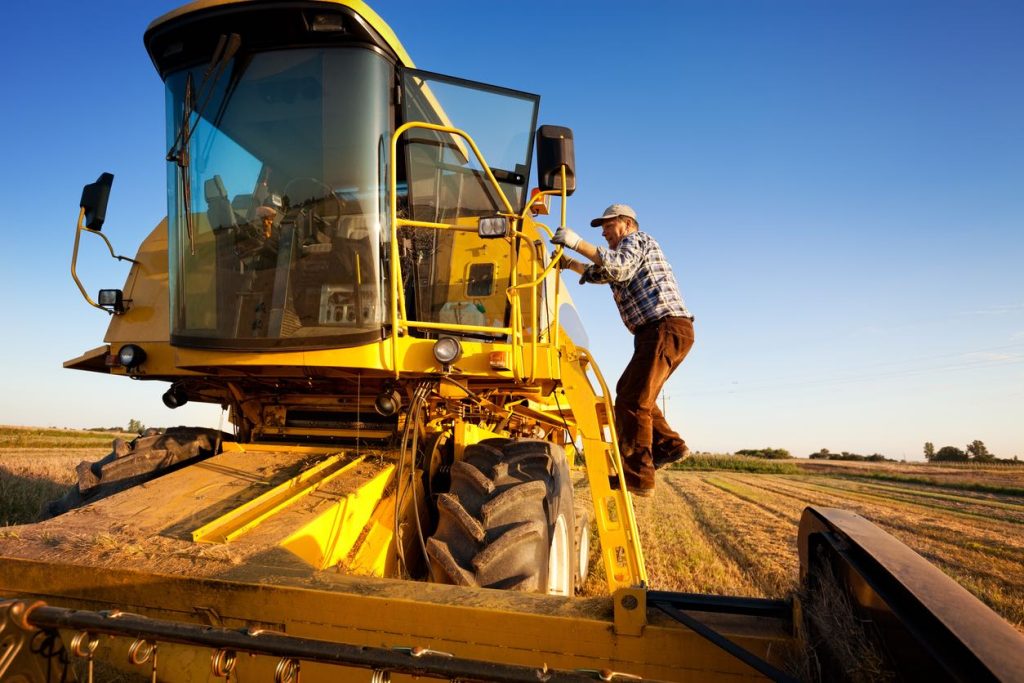
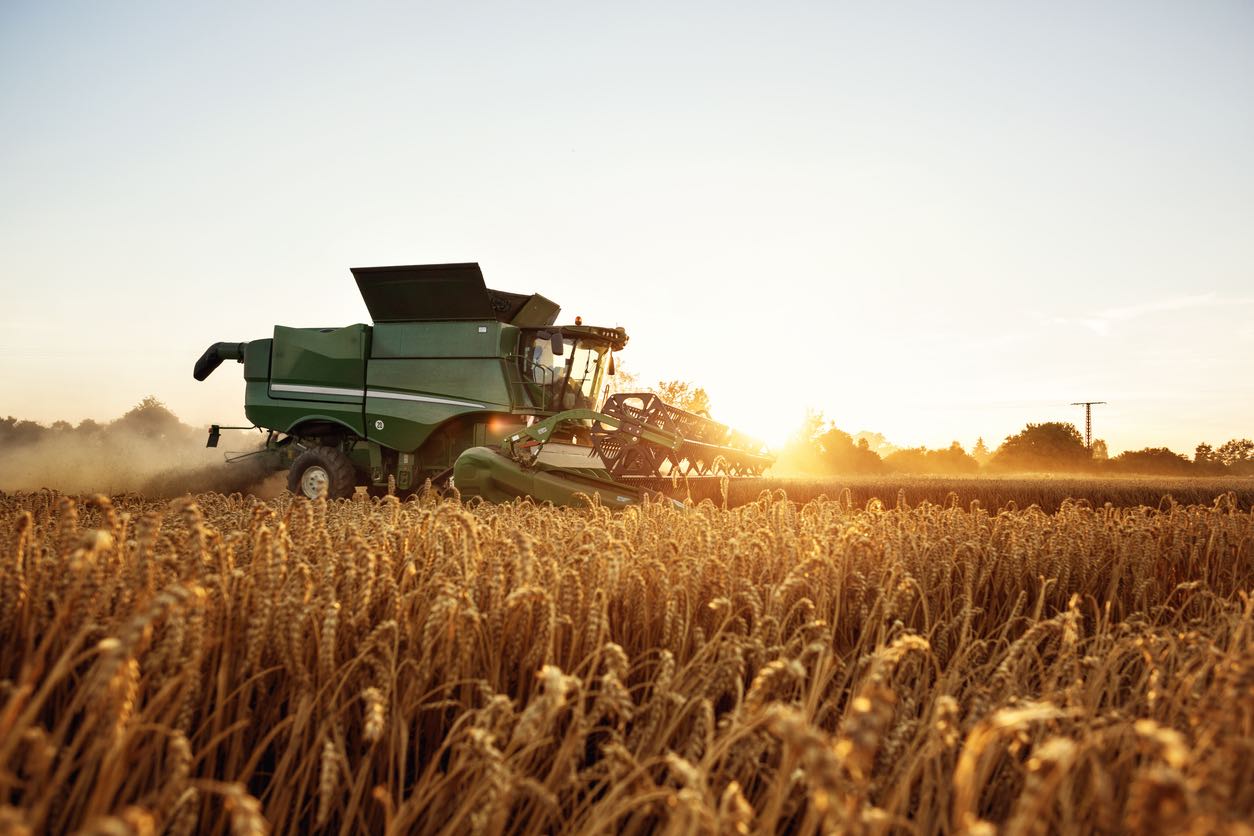
Combines are the extreme case. The machine itself is frequently 12 to 16 feet wide, and with a modern header fitted it can exceed 30 feet. Nobody transports a combine with the header on: it comes off and travels on its own header trailer, which is a purpose built piece of equipment and part of why the total move costs what it does.
High clearance sprayers are the height problem. The whole point of the design is ground clearance, and a sprayer sitting on a trailer deck is tall before anybody measures. Booms fold, and folding them properly is what keeps the load inside a workable width.
Planters and air seeders fold for transport by design, and modern ones fold well, but a 24 row planter folded is still a wide load in most states. Large four wheel drive articulated tractors are wide on duals; removing the outer duals is frequently what brings one back to legal.
What That Means for Cost
Transport pricing on farm equipment follows a simple logic once you know the dimensions.
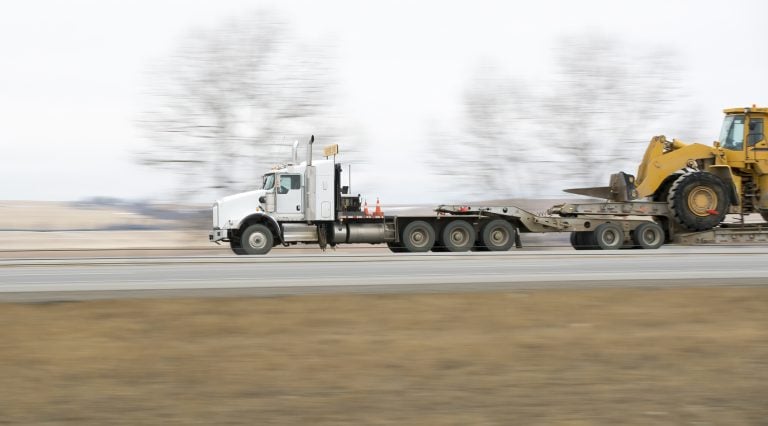
A machine inside legal limits moves as ordinary freight on a step deck or lowboy at a predictable rate. Past 8 feet 6 inches wide it needs a permit for every state on the route. Past roughly 12 feet, escort vehicles come in, with thresholds set per state. Wider again and you are into route restrictions, daylight only movement and, at the top end, engineering review.
Each of those steps adds real cost, which is why twenty minutes spent folding a boom, removing duals or taking off a header before the truck arrives is genuinely worth doing. Our guide to wide and oversize loads covers the thresholds in detail.
Timing Is Everything in This Sector
Agricultural transport is the most seasonal freight there is, and it is not a gentle curve.
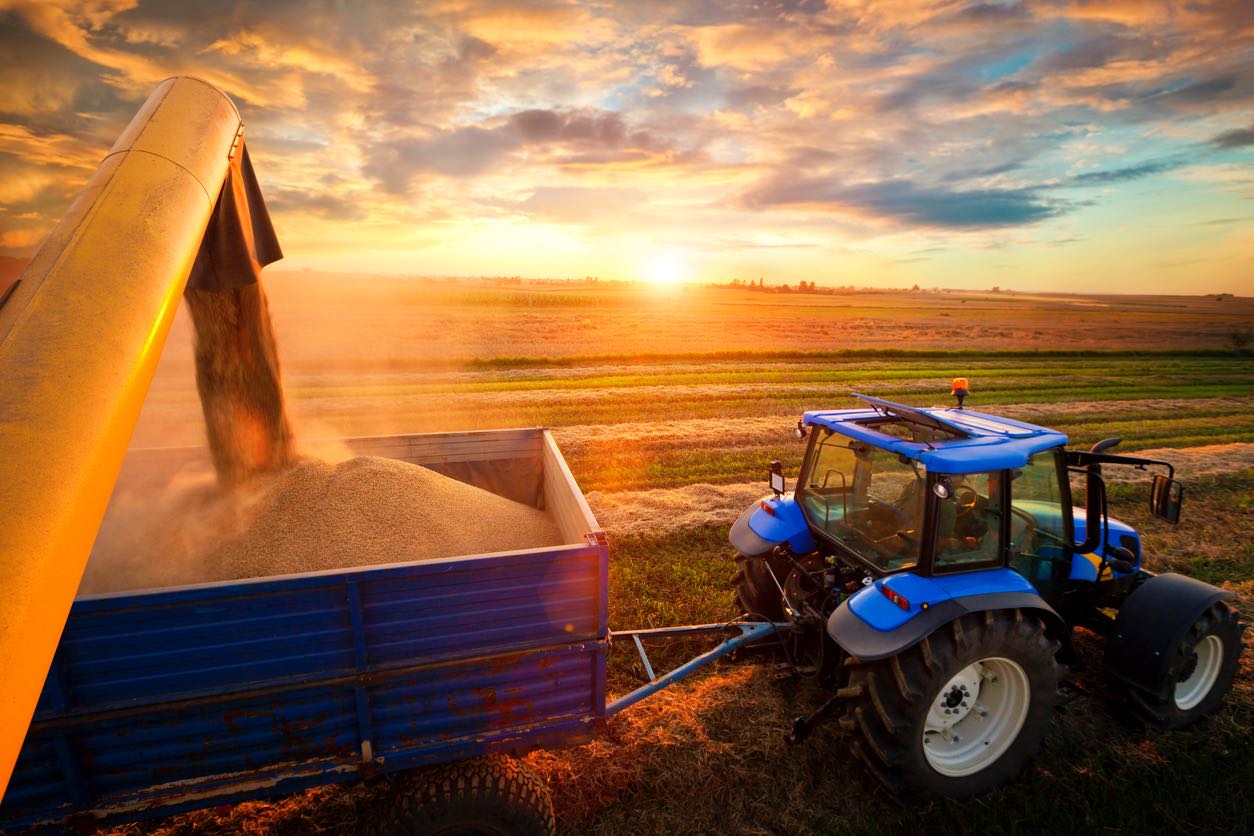
Planting in spring and harvest in fall both concentrate demand into a few weeks, and carriers with header trailers and the right lowboys commit early. Custom harvesting crews moving north through the season absorb a great deal of the available capacity.
Auction season adds a second spike. Farm auctions cluster in late winter and after harvest, and a machine bought at auction usually has to move within days rather than weeks, which is exactly when capacity is tight.
Buy the transport when you buy the machine, not afterward.
Buying Used and Buying Remotely
High equipment prices have pushed a great deal of activity into the used market, and much of that is bought sight unseen at distance.
Get the hour meter reading, the serial number and daylight photographs of every side including the undercarriage before you pay. Ask specifically whether the machine runs and drives, because a non running machine needs winching onto a trailer and that changes the carrier and the price.
Establish who is responsible for removing the header, folding the booms or pulling the duals. That work happens at the seller’s yard, and a buyer who assumes the carrier will do it is a buyer whose truck arrives to a machine that cannot legally leave.
Photograph everything before it loads and get existing damage described specifically on the bill of lading. Used farm equipment arrives with wear as standard, and a general description of “used condition” is what defeats a claim later.
Preparing a Machine for Transport
Give an accurate weight from the manufacturer’s specification or a scale, and include everything traveling with it: full tanks, duals, front weights and any mounted implement.
Measure the machine as it will actually sit on the trailer, folded and with removable parts off, from the ground to the highest fixed point and at the widest point.
Clean the machine properly. Soil carried between regions spreads pests and weed seed, some states restrict it, and packed dirt is weight you are paying to haul. Secure or remove anything loose, disconnect the battery on a long move, and lower or lock hydraulics per the operator’s manual. Our guide to shipping farm equipment covers the process end to end.
Common Questions
Does a combine ship with the header on? No. The header comes off and travels on its own trailer. With it fitted the machine can exceed 30 feet wide.
What makes a sprayer difficult? Height. High clearance is the design goal, and a sprayer on a trailer deck is tall before anything else is measured. Fold the booms properly.
Do I need a permit? Past 8 feet 6 inches wide or 13 feet 6 inches high from the road, yes, for every state on the route. Escorts come in past roughly 12 feet.
When should I book? When you buy the machine. Planting, harvest and auction season all spike demand for the specialized trailers this work needs.
Should I remove the GPS equipment? Remove what is removable. Masts and receivers add height and are expensive to replace. Check with the dealer first if a receiver is keyed to the machine.
Get a Quote
Call Ship A Car, Inc. at (866) 452-3657 for heavy haul and specialized freight with the make and model, the folded width and height, the weight and whether a header trailer is needed, or price it with the specialized transport calculator.