If you have ever hired an auto transport company, you have probably seen references to USDOT numbers and MC numbers. These credentials are how the Federal Motor Carrier Safety Administration (FMCSA) identifies and regulates carriers operating in interstate commerce. They are the foundation of trust and accountability in the trucking and auto transport industry.
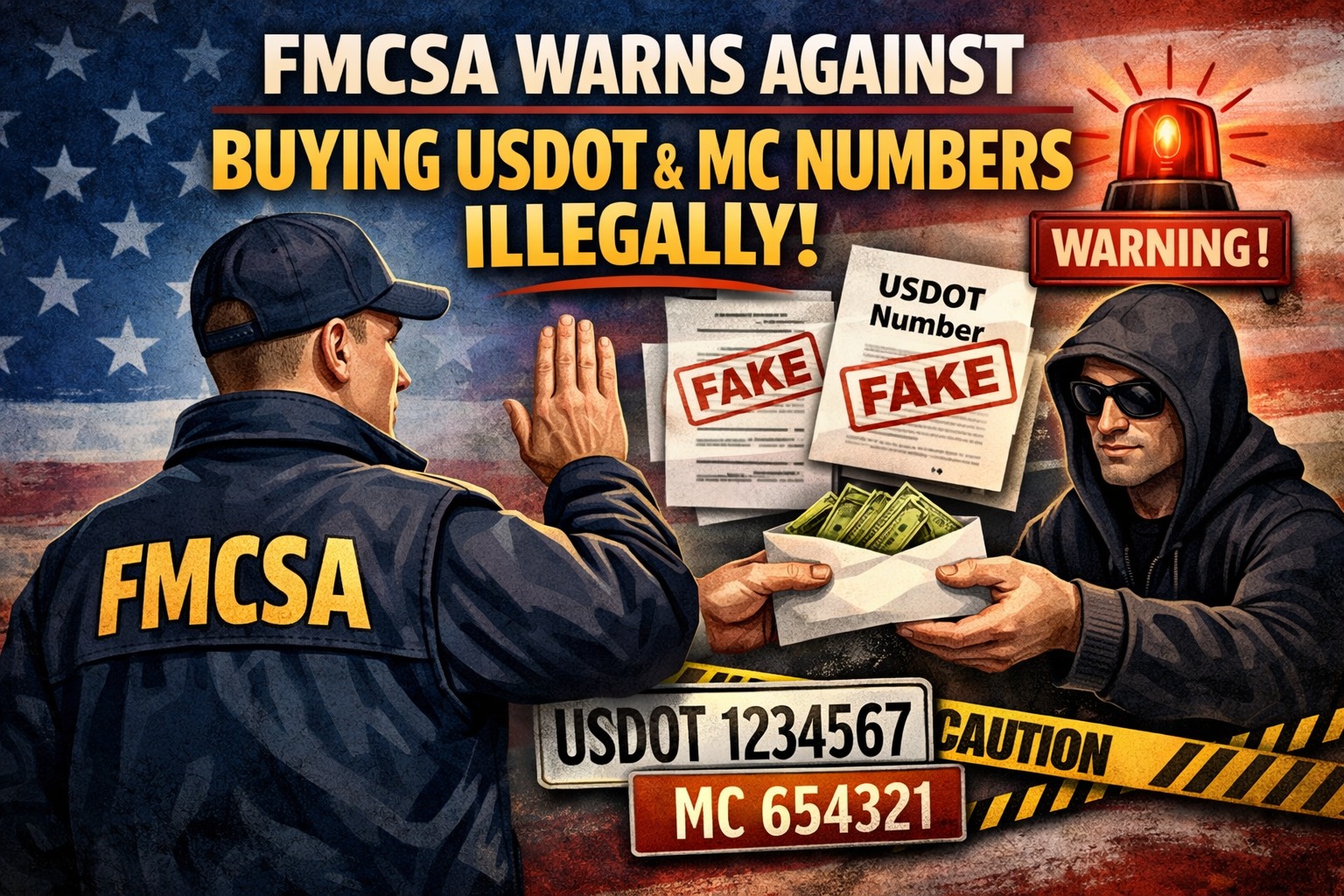
The FMCSA has recently issued a formal warning to carriers, brokers, and the public: attempting to buy, sell, rent, or lease a USDOT number or MC operating authority number outside of a legitimate corporate transaction is illegal – and the agency will not hesitate to act. The consequences include immediate inactivation of the USDOT number and revocation of all related operating authority registrations.
For customers shipping a vehicle, this matters more than you might think.
A USDOT number functions like a legal identification card for a motor carrier. It is assigned to a specific legal entity – whether that is an individual sole proprietor or a registered corporation – and it stays with that entity permanently. It cannot be transferred, sold, rented, or leased to anyone else.
An MC number, also known as Operating Authority, is required for carriers that transport passengers or regulated commodities for hire in interstate commerce. It authorizes a carrier to operate along any route across the country. Like the USDOT number, MC numbers are tied to specific legal entities and have strict rules around how they can be transferred.
According to the FMCSA, some carriers and individuals are attempting to short-circuit the registration process by purchasing or leasing existing USDOT and MC numbers from other entities. This is illegal under federal law, regardless of the intent of the parties involved.
The FMCSA has made its position clear:
“Upon discovery of attempts to sell, purchase, or lease a USDOT Number or Operating Authority outside of a legitimate corporate transaction, FMCSA will initiate proceedings to inactivate the USDOT Number and revoke all related registrations.”
In plain terms: if a carrier is caught buying or selling credentials, they will be shut down. No warnings, no grace period – their operating authority will be revoked and they will be prohibited from operating legally on U.S. roads.
The FMCSA distinguishes between sole proprietors and corporations when it comes to legitimate credential transfers:
Sole Proprietors: A USDOT number issued to an individual (for example, John Doe doing business as Doe Trucking) belongs to that person permanently. If the business is sold, the buyer must obtain their own USDOT number. The original number cannot pass to the new owner under any circumstances.
Corporations: If a business is structured as a corporation, the USDOT number belongs to the corporate entity, not the individual. A sale of the corporation can include the USDOT number – but only if the legal entity itself continues to exist under the same name and structure. If the corporation is dissolved and operations merge into a new company, a fresh USDOT number is required.
The same framework applies to MC numbers. In corporate transactions, FMCSA will record a transfer of operating authority only if motor carrier operations continue with the same safety management oversight and controls after the transaction.
You might be wondering: why should a vehicle owner care about credential transfers between carriers? The answer is simple – it is a red flag for fraud and a serious risk to your shipment.
A carrier operating on illegally purchased or leased credentials is exposed. If the FMCSA discovers the violation and revokes their operating authority, that carrier is immediately prohibited from operating – which could leave your vehicle stranded mid-transit. Their insurance may also be invalidated, leaving you with no recourse if your vehicle is damaged or lost.
Worse, carriers who cut corners on federal registration requirements are often cutting corners elsewhere too. They may not carry adequate cargo insurance, may use unvetted drivers, or may not maintain their vehicles to federal safety standards. The credential violation is often a symptom of a larger pattern of non-compliance.
Before entrusting your vehicle to any auto transport company, take a few minutes to verify their credentials through official FMCSA tools:
- FMCSA SAFER System (safer.fmcsa.dot.gov): Look up any carrier by name, USDOT number, or MC number. You can see their current operating status, insurance details, safety rating, and inspection history.
- Confirm Active Status: Make sure the carrier’s USDOT number and MC number are listed as Active, not Inactive or Revoked.
- Check Insurance: Verify that the carrier carries current cargo insurance. Active, legitimate carriers update their insurance filings with FMCSA regularly.
- Look at the Safety Rating: Carriers with Satisfactory ratings have passed FMCSA compliance reviews. Unsatisfactory ratings or conditional ratings are warning signs.
If a carrier cannot provide their USDOT number and MC number upfront, or if their credentials come back inactive when you check, walk away.
At Ship A Car, Inc., compliance is not an afterthought – it is the baseline. SAC operates under active USDOT and MC registrations and works exclusively with a vetted network of licensed, bonded, and fully insured carriers. Every carrier in the SAC network is screened for active credentials, valid insurance, and a clean safety record before they are ever assigned a customer vehicle.
When you book with SAC, you are not just hiring a company – you are getting the assurance that every carrier involved in your shipment has been verified and meets federal regulatory standards. In an industry where credential fraud is a real concern, that peace of mind is worth a great deal.
U.S. DOT No. 2303542 | MC #784930 | Fully Licensed and Bonded
The FMCSA warning is a timely reminder that the auto transport industry – like any regulated industry – has its share of bad actors looking to game the system. Buying or selling federal operating credentials is not a technicality. It is a federal violation that puts carriers out of business and puts shippers at risk.
The best defense is a simple one: do your homework before you book. Verify credentials, check insurance, and work with established, reputable brokers and carriers who take federal compliance seriously.
Ready to ship your vehicle with a company you can trust? Call Ship A Car, Inc. at (866) 821-4555 or get a free quote online today.