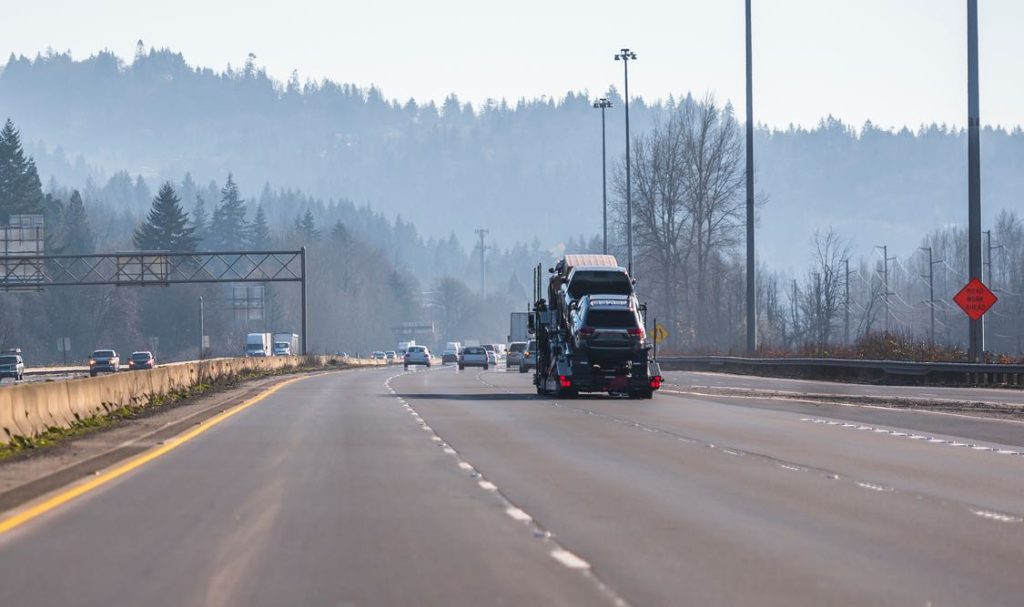
Shipping a Car from Alaska to Seattle
This is the shortest Alaska lane there is, because Seattle and Tacoma are where the ships already go. Vehicles leaving Alaska sail from Anchorage to the Puget Sound ports, which means no long overland leg waiting at the far end. The sailing itself takes about a week. What decides your total is how far your car has to travel inside Alaska to reach Anchorage, and whether you catch the sailing you were booked on. Plan around those two and this is a straightforward move.

The Route
Almost every vehicle leaving Alaska goes by sea. Your car is delivered to the port at Anchorage, loaded onto a scheduled sailing, and unloaded at Tacoma about a week later. From there it is either collected by you or moved onward by road.
A land route exists, the Alaska Highway down through the Yukon and British Columbia, but commercial carriers rarely use it. It is roughly 2,000 miles of remote road and it crosses an international border in both directions, which brings customs requirements a domestic move otherwise avoids. If you are driving it yourself that is a genuine adventure, and it is not how vehicles are shipped.
Door to door, allow one to three weeks southbound. That is shorter than the two to four weeks a northbound move usually takes, purely because the destination is the port rather than somewhere beyond it.
Where You Are in Alaska Decides the First Leg
This is the part that varies most and the part quotes most often get wrong.
From Anchorage or the immediate surroundings, the car goes straight to the terminal and there is effectively no first leg. From Fairbanks it is around 360 miles down the Parks Highway, which is a day and adds cost. From the Kenai Peninsula it is shorter but still a real drive.
Southeast Alaska is the exception worth flagging. Juneau, Ketchikan and Sitka have no road connection to the rest of the state at all, so a vehicle there needs a separate barge movement before it can join anything else. That is entirely routine locally, but it is an extra leg with its own schedule and it needs building into the plan rather than discovering later.
Sailings Are Weekly, Not Continuous
Road transport runs on driving hours. Ocean transport runs on a timetable, and that changes how you should think about the schedule.
Vessels leave on a fixed weekly rhythm. Arriving at the terminal the day after one departs does not cost you a day, it costs you a week. That is the single biggest reason to build a buffer into the Alaska leg rather than aiming to reach the port the morning of a sailing.
Book three to four weeks ahead. Summer is busiest, both because it is the general moving season and because Alaska’s road network is at its most usable, so allow the longer end of that in June through August.

What It Costs
The ocean leg for a standard sedan from Anchorage to Tacoma commonly runs somewhere around $1,100 to $1,700, and the honest answer is that it varies more than a road quote does. Ocean rates are calculated from the vehicle’s measured dimensions rather than from mileage, so a full size truck or SUV costs meaningfully more on the identical sailing.
Add the in state road leg if you are not starting in Anchorage, terminal handling at each end, and onward road transport from Tacoma if the car is not staying in the Puget Sound area. Ask for the total including all of those rather than the sailing price alone, because a quote covering only the sea portion is not the number you will pay.
The Car Travels Empty
Same federal rule as any ocean move, and carriers do check. Vehicles must be empty of personal belongings apart from factory equipment, and a car found loaded is held until it is emptied, which usually means missing the sailing.
Empty means no boxes, no tools, nothing in the trunk. Remove roof racks and cargo boxes as well, since ocean rates are based on measured dimensions. Fuel should be at or below a quarter tank.
Paperwork and Winter
Bring the original title or current registration rather than a photocopy, photo identification matching it, and a lien authorization letter if the vehicle is financed. That last one delays more shipments than weather does, because lenders routinely take a week or more to issue it. Request it as soon as you decide to move.
On winter: the sailing runs year round and the sea leg is largely unaffected. What winter changes is the drive to the port. If your car is coming down from Fairbanks in January, that is a serious winter drive on the Parks Highway, and it is worth having the battery tested and the tires checked before it starts rather than discovering a problem halfway. Allow extra days at that end of the trip, not the sea end.
Common Questions
How long does it take? One to three weeks door to door, of which about a week is the sailing itself.
Can I ship it up the Alaska Highway instead? Commercial carriers rarely do. It is 2,000 miles of remote road with border crossings both ways.
What if I am in Juneau or Ketchikan? Southeast Alaska has no road link to the rest of the state, so a separate barge leg comes first. Plan for it.
Can I leave belongings in the car? No. Vehicles must be empty for the sailing, and a loaded car misses it.
What delays shipments most? The lien authorization letter, and missing a sailing. Both are avoidable with a few weeks of notice.
Get a Quote
Call Ship A Car, Inc. at (866) 821-4555 with where in Alaska the car is starting and where it is going after Tacoma, and we will quote every leg together.