Sports Cars and How to Ship One Properly
What makes a sports car different in transit: not the power, the geometry. Low front splitters, short approach angles, wide staggered tires, and stiff suspension mean a car that drives beautifully can be damaged simply being loaded onto the wrong trailer. That single fact drives every recommendation below, and it is why enclosed transport with a liftgate is the default for anything genuinely low.
The Loading Problem, Explained
Approach angle is the measure of how steep a ramp a car can climb before its front bodywork touches. On a family sedan it is generous. On a sports car with a front splitter sitting three or four inches off the ground it can be almost nothing. Standard car carriers load by ramp, and the ramp angle is fixed by the trailer’s geometry.

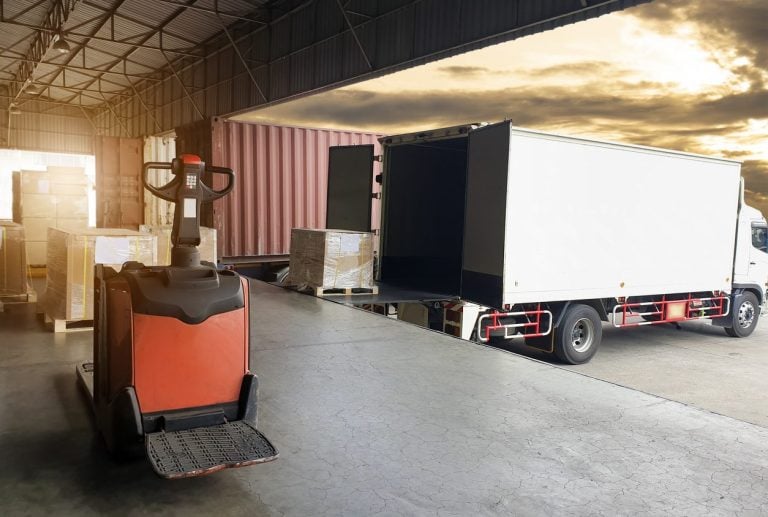
A hydraulic liftgate removes the problem entirely by raising the car level onto the deck. If you ship anything with a splitter, an air dam, or aftermarket lowering, ask specifically whether the assigned carrier has a liftgate. “Enclosed” does not imply it.
Tie-Downs: Wheels, Not Frame
Older practice chains a vehicle at frame or suspension points. On a modern sports car that risks control arms, underbody aerodynamics, and adjustable suspension components. Soft straps over the tires secure the wheels to the deck instead, letting the car’s own suspension absorb road movement exactly as engineered.
Confirm this is how your car will be secured. It is a reasonable question and any carrier experienced with performance cars will answer it without hesitation.
Matching Transport to the Car
What It Costs
Open transport runs roughly $0.84 to $2.05 per mile depending on distance: about $400 to $950 for 200 to 500 miles, $1,000 to $1,300 around 1,000 miles, and $2,200 to $2,800 coast to coast. Enclosed adds roughly 20 to 30 percent, and a liftgate-equipped or dedicated single-vehicle trailer costs more again.
For a car where a scuffed splitter runs into four figures at a body shop, the enclosed premium is straightforwardly worth it. For a stock-height coupe that lives outside, open transport is fine.
Insurance Is Where Owners Get Caught
Carrier cargo insurance is included in the price and is generous for an ordinary vehicle. For a performance car with a six-figure value, or a modified car whose parts cost far more than its book value, the standard limit is frequently insufficient.
Ask for the certificate, read the stated limit, and compare it against real market value. If there is a gap, arrange supplemental transit coverage or choose a carrier with higher limits, and check whether your own agreed-value policy extends to transport under a third-party carrier.
Preparing a Sports Car
- Wash it first. Condition photographs are useless on a dirty car, and paint marks are what get disputed.
- Photograph in daylight: every panel, wheels, splitter, lower valances, roof, interior, odometer.
- Note ride height settings. If the car has adjustable or lift-mode suspension, tell the driver so they use it during loading.
- Leave about a quarter tank and disable any aftermarket alarm.
- Flag unusual starting procedures, kill switches, or a clutch that needs a particular technique.
- Remove the toll transponder and everything loose in the cabin.
Booking Around Event Season
Enclosed capacity is finite and it concentrates around major auctions, concours weekends, and track events. The weeks surrounding those dates are the hardest time to source a liftgate-equipped enclosed carrier at short notice. If your delivery is tied to an event, book several weeks out.
Common Questions
Can a very low car ship on an open carrier at all? Sometimes, using race ramps to reduce the approach angle, but it depends on the specific trailer. If the car is genuinely low, enclosed with a liftgate removes the uncertainty.

Is a non-running sports car shippable? Yes, on a winch or liftgate-equipped carrier, typically adding $100 to $250. Say whether it rolls, steers and brakes.
Will the driver start my car? Standard practice is to load, secure, and not start until unloading. If your car needs periodic running or must not be started, say so at booking.
How long does transit take? One to three days regionally, three to five at around 1,500 miles, five to seven coast to coast, plus a day or two of window on each end.
Staggered Tires and Wheel Straps
Many performance cars run wider rear tires than front, and some run different diameters. This matters at loading because wheel straps are sized and positioned for the tire, and a carrier used to uniform sedan fitments may need to adjust. It is not a problem, but mentioning it saves time on the ramp.
Aftermarket wheels with delicate finishes are worth flagging for the same reason. Strap contact points are on the tire, not the wheel, but a driver who knows the wheels are expensive handles them accordingly.
Track Cars and Race Cars
A car set up for track use frequently cannot be shipped as a road car. Slick or semi-slick tires behave differently on a wet deck, aggressive aero hangs lower than stock, harnesses and cages change how the interior can be accessed, and many track cars are not street legal, which means they cannot be driven even the short distance to a meeting point.
For those, plan on enclosed transport with a liftgate and a pickup location the trailer can reach directly. Tell the coordinator the car is track-prepared rather than describing it by model, because the model name understates the handling requirements.
Seasonal Storage Moves
A large share of sports car transport is the same vehicles moving twice a year, out of storage in spring and back in autumn. Those weeks are the tightest in the enclosed market because every owner on the same circuit needs the same trailers simultaneously. If your car does this annually, book both legs together and consider a standing arrangement rather than starting fresh each season.
Get a Quote
Call Ship A Car, Inc. at (866) 821-4555 to arrange enclosed transport, or start with the instant calculator.