How to Purchase a Car from Out of State
Buying a car in another state is mostly an ordinary purchase with three extra problems attached: you cannot easily inspect it, the paperwork has to satisfy two states rather than one, and you have to get it home. Handle those three in the right order and the wider selection and better price that took you out of state in the first place are worth having.
Inspect It Without Being There
This is the part that decides whether the whole thing was a good idea, and photographs from the seller are not an inspection.
Pay an independent mechanic near the car for a pre-purchase inspection. It is a small fraction of the purchase price and it is the single most useful money you will spend. A good one covers the mechanical condition, evidence of accident repair, frame and structural checks, and a road test.
Run the vehicle identification number through a history report as well, and treat a clean report as a starting point rather than proof. Reports miss unreported accidents and they miss flood damage that was never claimed.
Ask for a video walkaround in daylight with the engine running and the seller narrating, including the underside, the tires and any panel gaps. A seller who will not do that is telling you something.
Dealer or Private Seller Changes the Paperwork
Both work, and they fail in different ways.
A dealer will normally handle title and registration paperwork, will often be set up to process an out of state sale routinely, and gives you a business to pursue if something is wrong. You pay for that in the price.

A private sale is usually cheaper and puts the entire paperwork burden on the two of you. Verify that the name on the title matches the seller’s identification, that there is no lienholder listed, and that the odometer reading on the title matches the car. A title with a lien still on it cannot be transferred until the lender releases it, and that is not a problem to discover after you have paid.
Sales Tax and Registration
The general rule is that you pay sales tax where you register the vehicle, which is your home state, not where you bought it.
Many states have reciprocity arrangements so you are not taxed twice, but the details vary and the burden of getting it right is yours. Check with your own motor vehicle agency before you buy rather than after, because the answer occasionally changes the arithmetic on whether the out of state deal was actually cheaper.
Emissions and safety inspection rules are the other trap. Some states will not register a vehicle that cannot meet their emissions standard, and a car built to a different specification can be a problem. If you live somewhere with strict standards, confirm your specific vehicle can be registered at home before money changes hands.
You will also need a temporary tag or transit permit to move the car legally if you are driving it, and the rules for those differ by state.
Paying Safely
Use a method that leaves a record and does not release funds until the title does.
An escrow service is worth considering on a private sale at a distance. A bank wire is fast and final, which cuts both ways. Be wary of any seller pushing for gift cards, cryptocurrency or a wire to a third party, and be wary of anyone who will not talk on the phone.
The classic long distance scam is a vehicle that is priced attractively, cannot be viewed, and comes with a plausible story about why the seller is out of the area. If the deal feels rushed, that is the point of the rush.
Getting It Home
Two options, and the choice is mostly about distance and what the car is.
Driving it back is cheaper on paper and adds fuel, lodging, meals and several days of your time, plus the mileage and the risk of a long trip in a vehicle you have just met. On a car you have not driven before, that last point is not trivial.
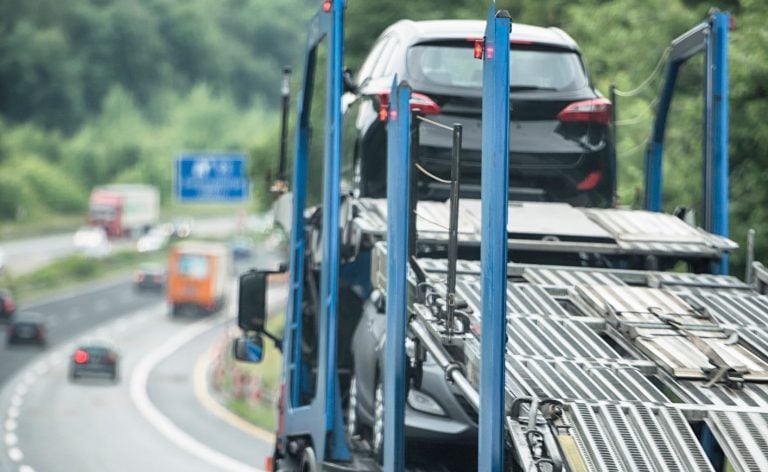
Shipping it puts the car on a trailer and puts you on a plane or nowhere at all. Open transport is right for an ordinary vehicle; enclosed costs 20 to 30 percent more and makes sense on a collector car or anything with real value.
Arrange transport once the sale is agreed but before you pay in full where you can, so you know the logistics work. Give the carrier honest access information at both ends, because a dealer lot is usually easy and a residential street with low branches is not. Our guide to shipping a car bought online covers the handover in more detail.
The Order to Do It In
Confirm the vehicle exists and the seller is who they say. Get the independent inspection. Check your home state’s tax, emissions and registration rules for that specific vehicle. Agree the price and the paperwork. Arrange transport. Then pay.
Doing it in that order means every discovery that could kill the deal happens before your money has moved.
Common Questions
Where do I pay sales tax? Generally in the state where you register the car, which is where you live. Confirm the details with your own motor vehicle agency.
Is a vehicle history report enough? No. It is a useful screen, but it misses unreported accidents and unclaimed flood damage. Pay for an independent inspection as well.
What is the biggest paperwork risk on a private sale? A title with a lien still recorded on it, or a name on the title that does not match the seller.
Should I drive it home or ship it? Ship it on a long distance, on a car you have not driven, or on anything valuable. Driving is reasonable on a short hop in a known-good vehicle.
Can I be refused registration at home? Yes, if the vehicle cannot meet your state’s emissions standard. Check before you buy, not after.
Get a Quote
Call Ship A Car, Inc. at (866) 821-4555 with both zip codes and the date the car will be released to us, or price the move with the instant calculator.